 SkillBamboo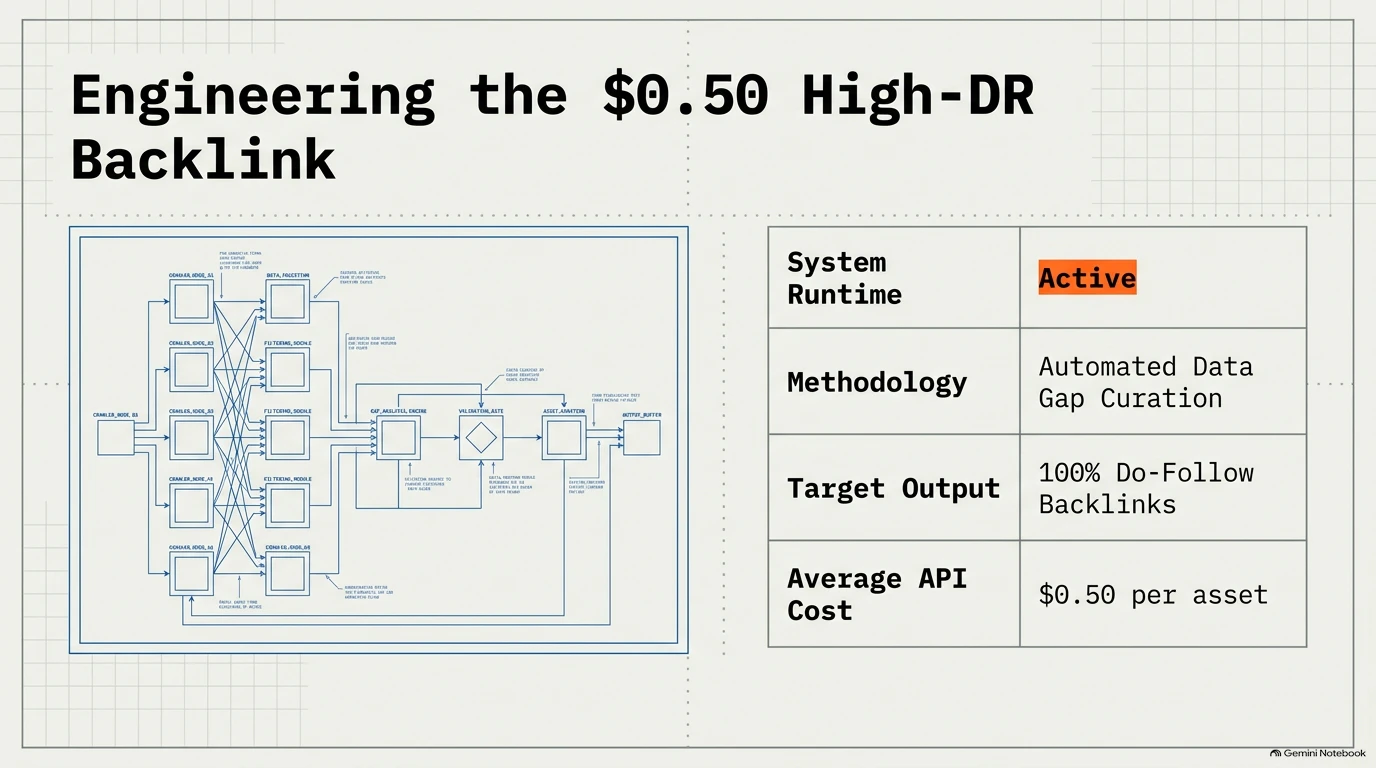

Introduction
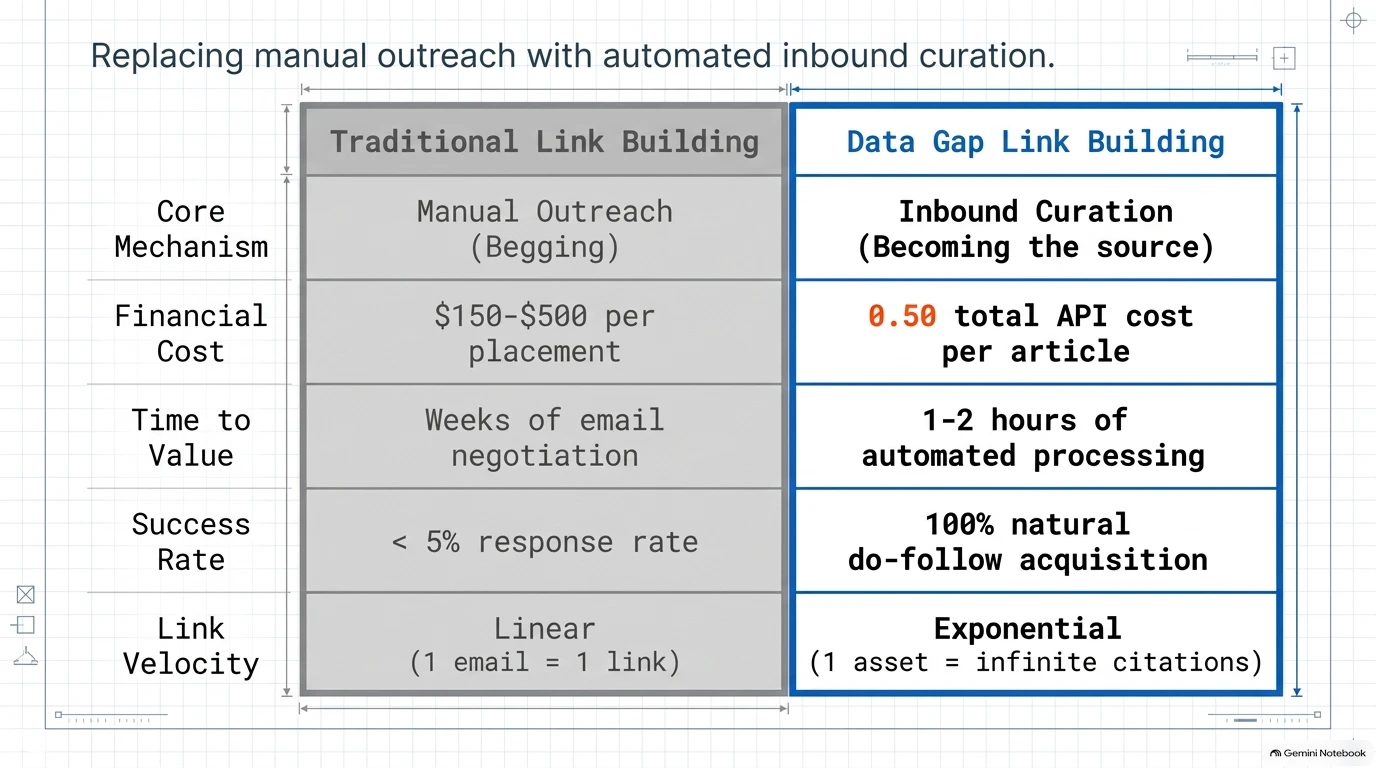
Traditional digital PR campaigns cost thousands of dollars. The Data Gap Method goes after the same kind of links for a few cents in API costs.
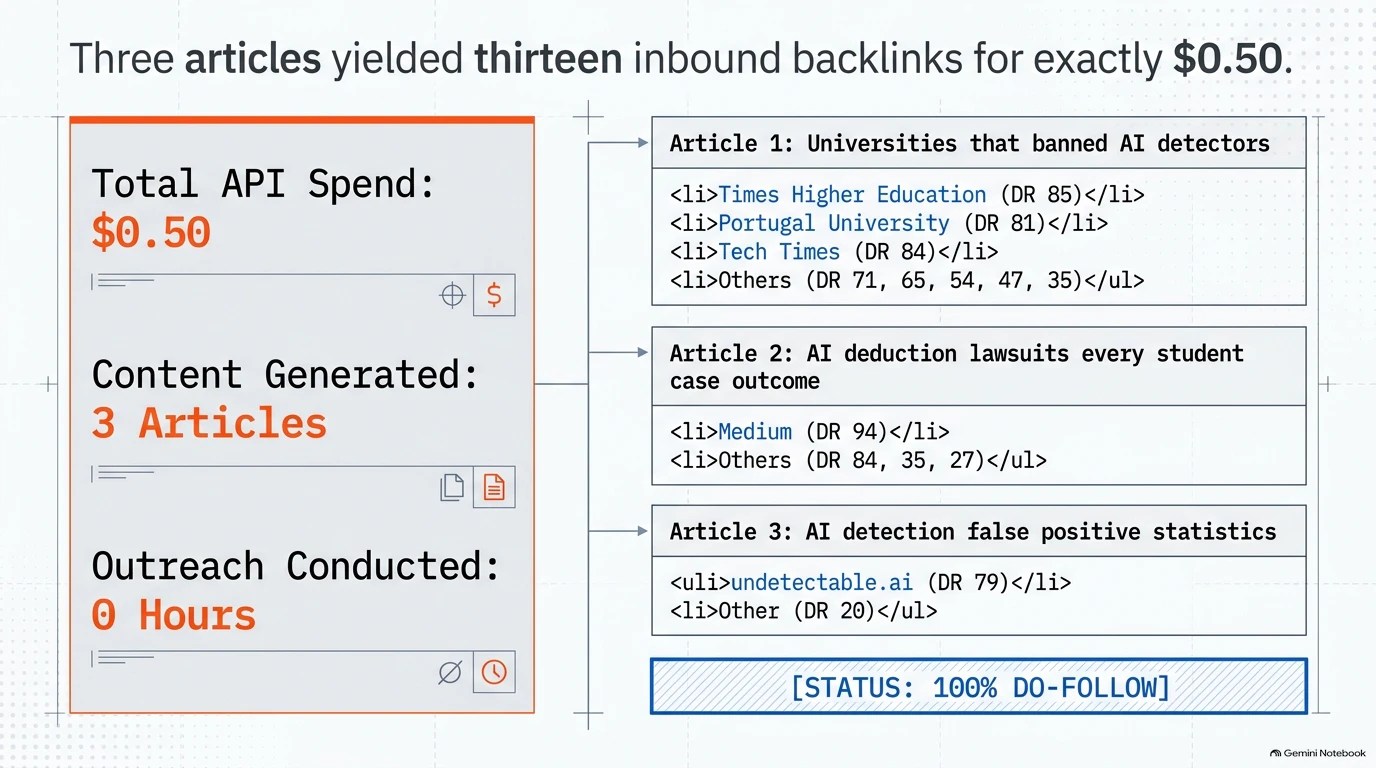
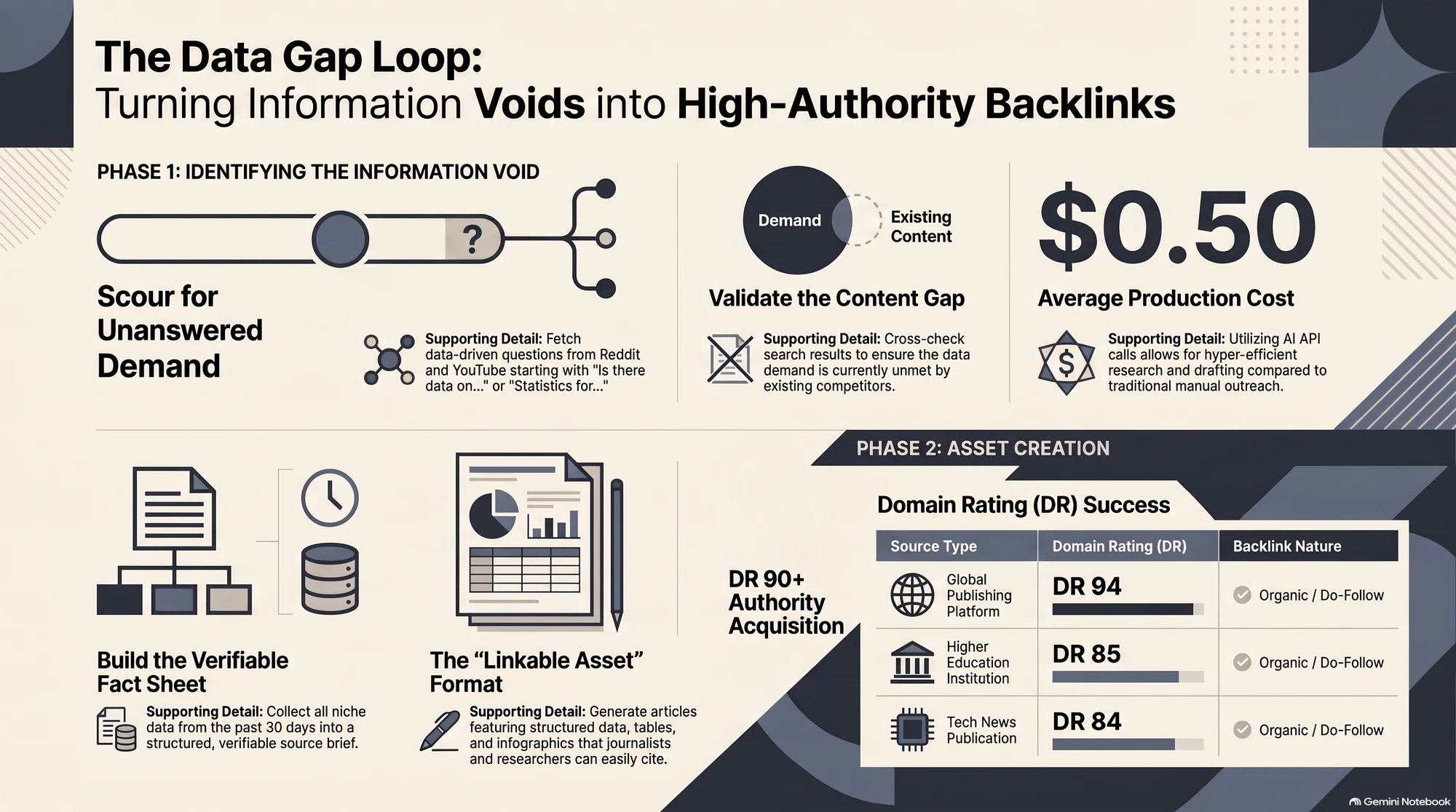
What if you could earn backlinks from Medium (DR 94 — that's Domain Rating, the usual shorthand for a site's link authority), Times Higher Education (DR 85), and university websites for that price?
That's the pitch. Find unanswered, data-heavy questions, use AI to curate the answers, and publish "linkable assets" that attract high-authority backlinks on their own — for free.
Here's the breakdown:
- The core philosophy behind the Data Gap Method, and why it attracts high-DR backlinks naturally.
- The 5-step strategy to identify, validate, and build highly linkable data assets.
- How to automate the research, validation, and content drafting process using AI tools.
- The specific APIs and infrastructure required to scale this system in any niche.
Why the Data Gap Works
Why do some articles struggle to get a single backlink while others collect dozens of high-authority citations organically?
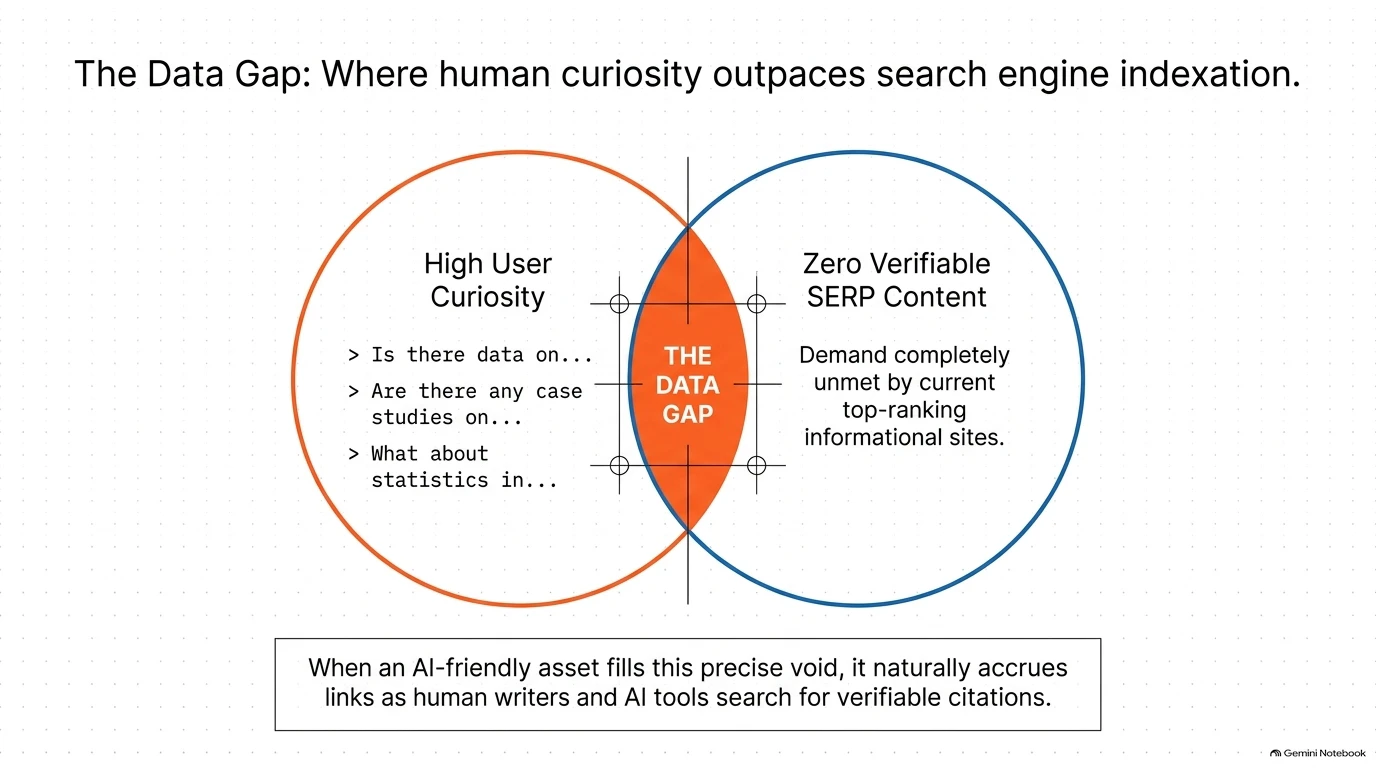
The answer is information asymmetry — better known as a "Data Gap." Think of it like a library shelf where the reference book should be and isn't.
Journalists, bloggers, and content creators are constantly looking for statistics, case study outcomes, and hard numbers to back up their claims. When they search for the exact numbers they actually need and find nothing, a gap exists.
So if you're the first to fill that gap with structured, verifiable, easy-to-read data, you become the primary source they cite.
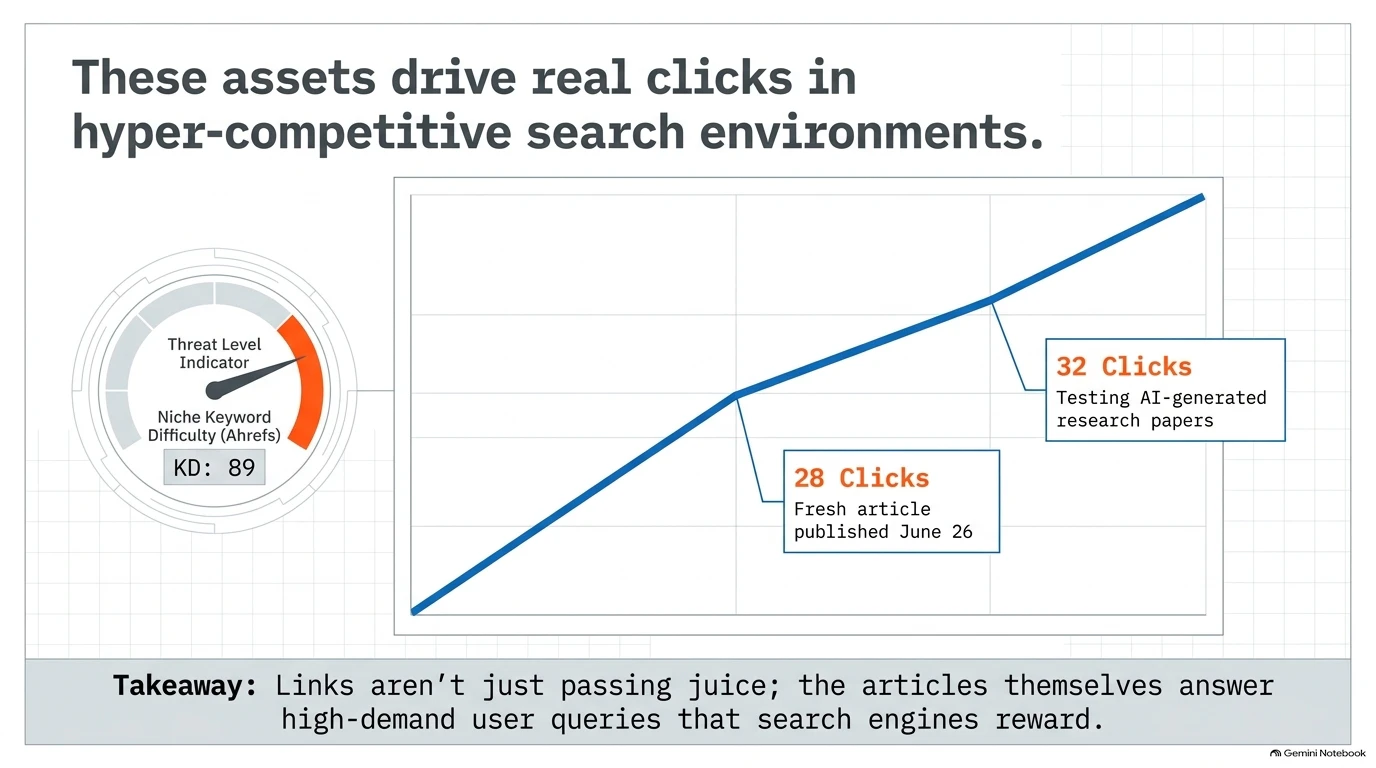
This strategy still holds up. Even in highly competitive niches (such as AI detection, one of the most contested keywords in SEO), these structured data articles pull in immediate clicks, impressions, and premium backlinks.
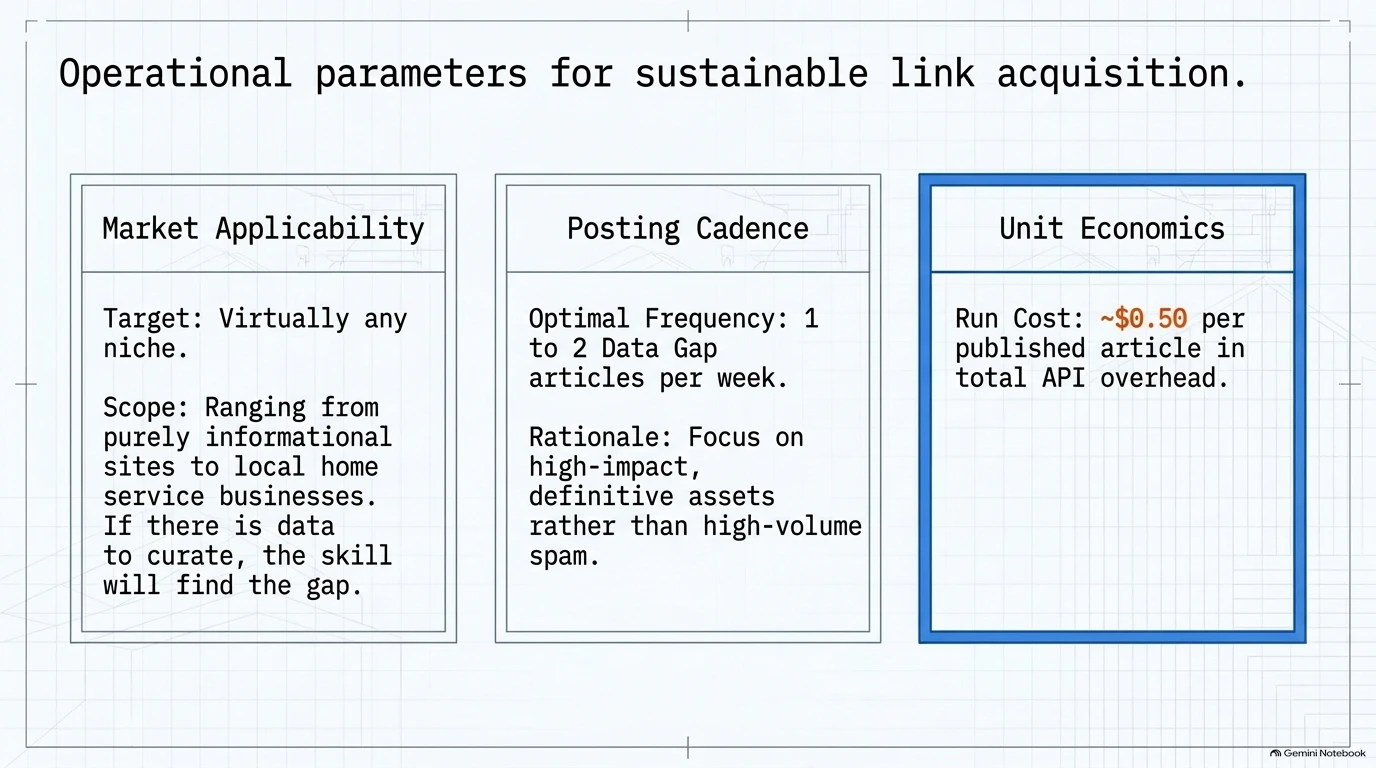
And the cost? The method's creator puts the API cost of one of these articles at around 50 cents.
The 5-Step Strategy to Find and Fill Gaps
Filling a data gap doesn't require complex manual journalism. It's a simple, repeatable 5-step workflow, and you can run every step with AI:
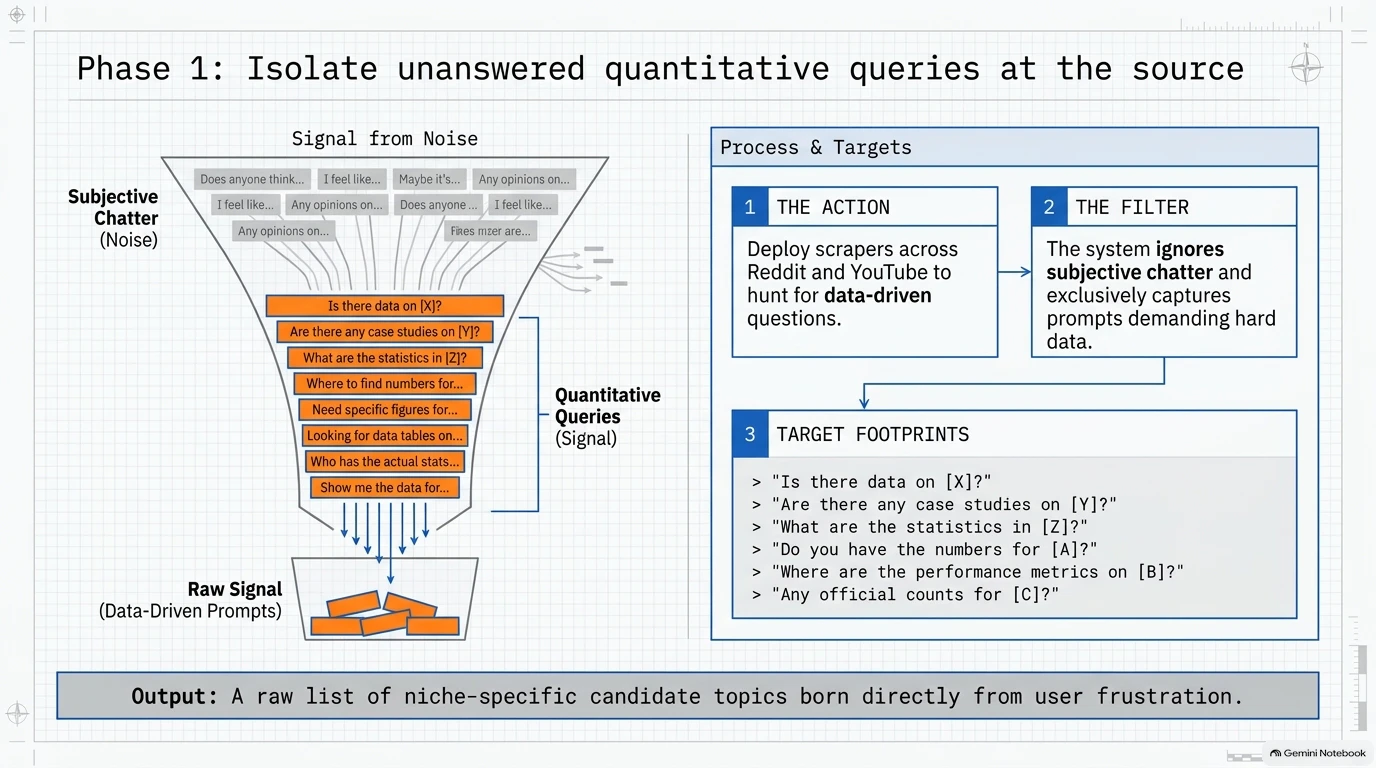
- Fetch Data-Driven Questions: Monitor forums like Reddit and YouTube comment sections. You're looking for people asking for hard data: "Is there data on...?", "Are there any case studies on...?", "What are the statistics for...?"
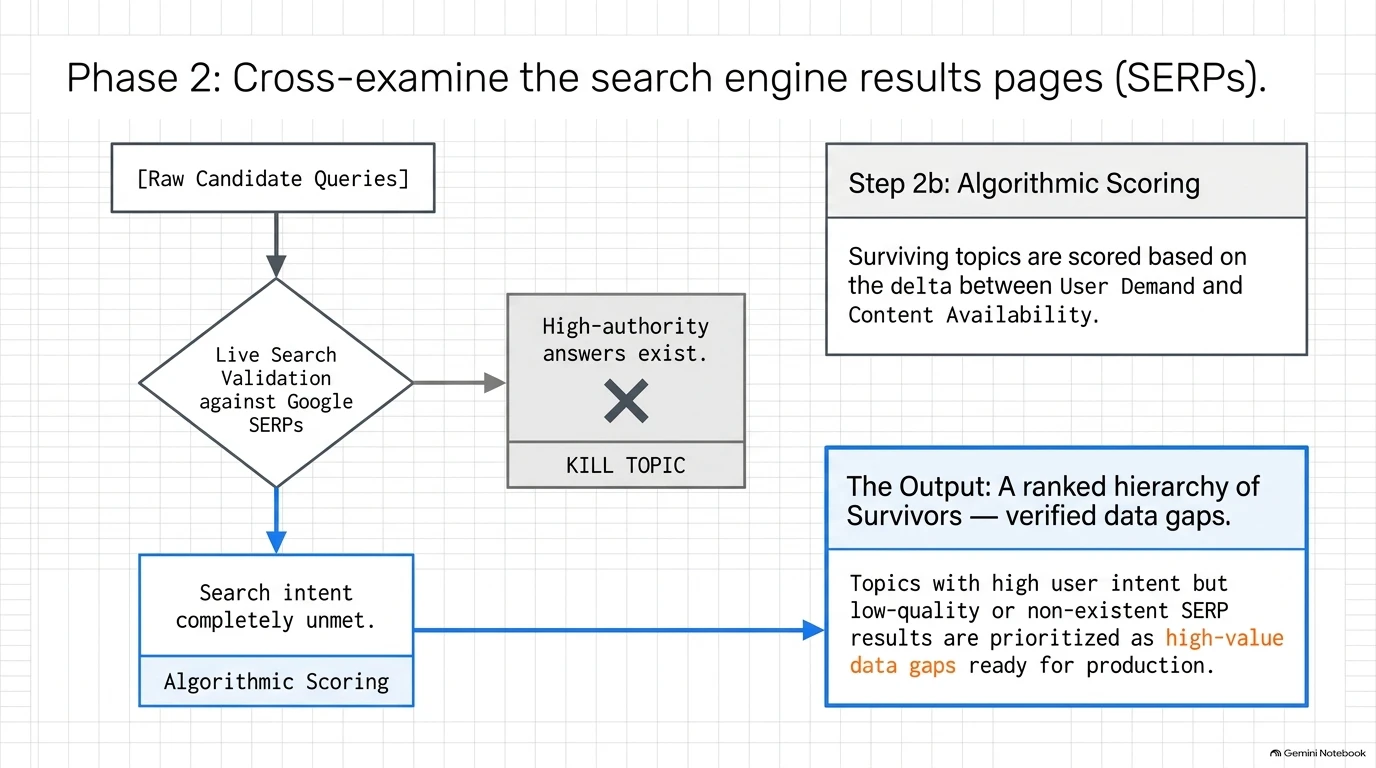
- Double-Check the SERPs: Search those exact questions on Google. If the search engine results pages (SERPs) hand back generic blog posts instead of real numbers, you've confirmed a genuine data gap.
- Select Your Topic: Pick the gap that fits your niche best, because a citation is only worth chasing if it points at a page you actually want to rank.
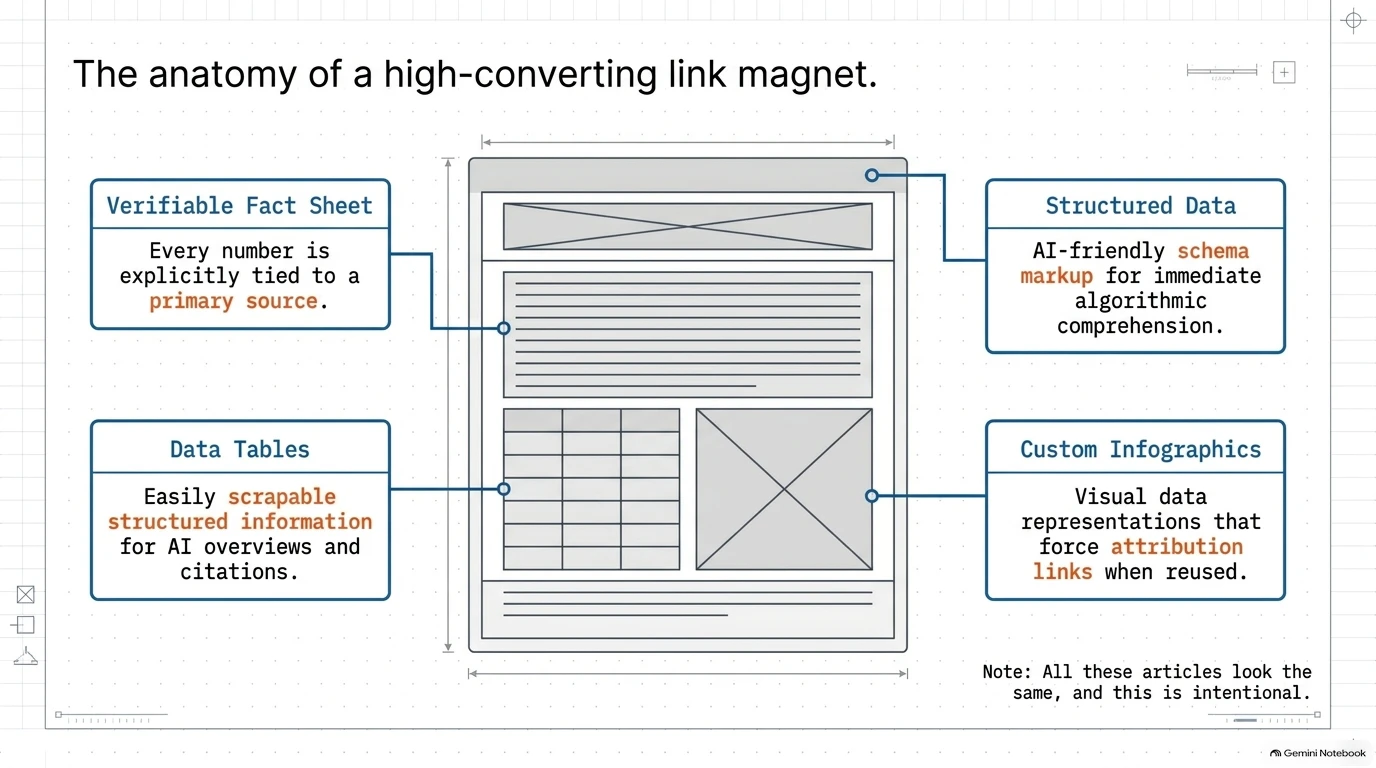
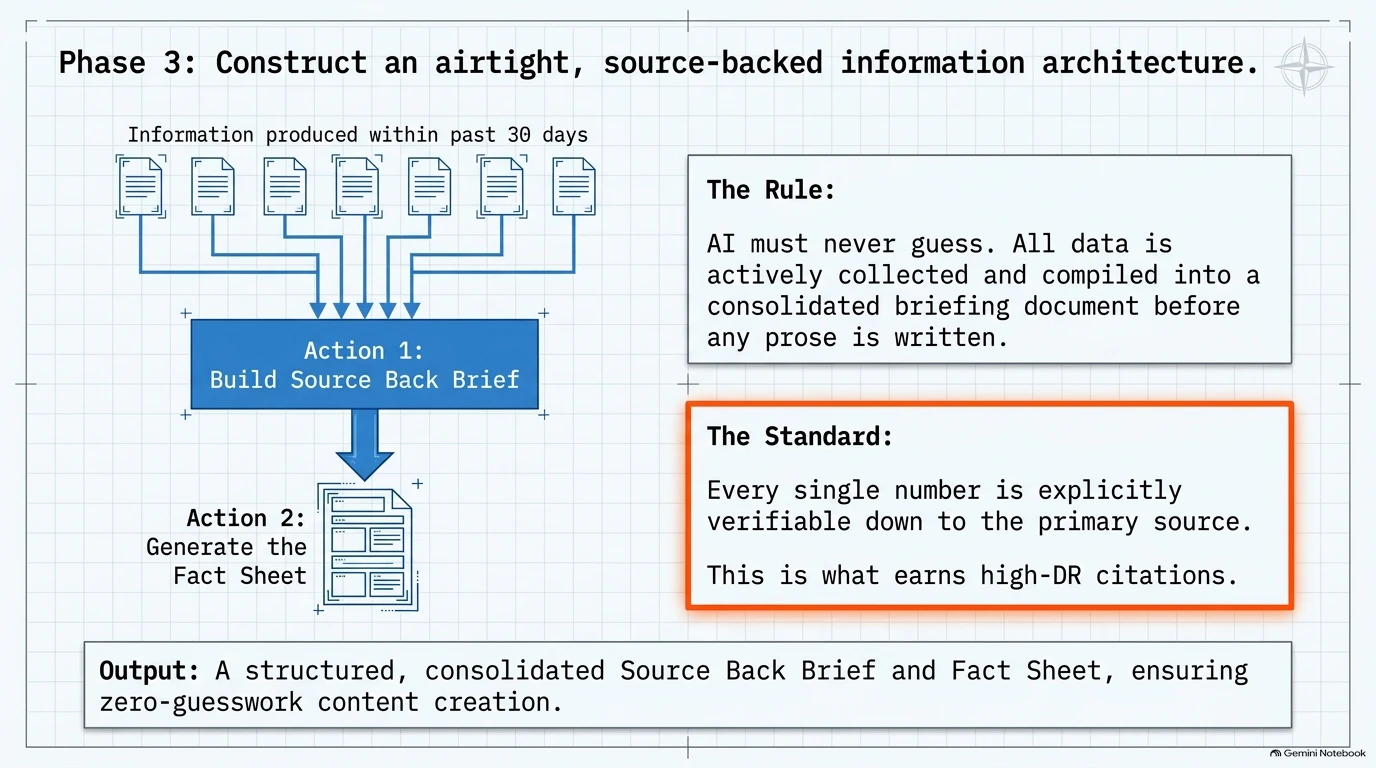
- Build a Fact Sheet: Collect every piece of relevant information published on the topic in the past 30 days. Organize it into a fact sheet where every single number is verifiable down to its original source.
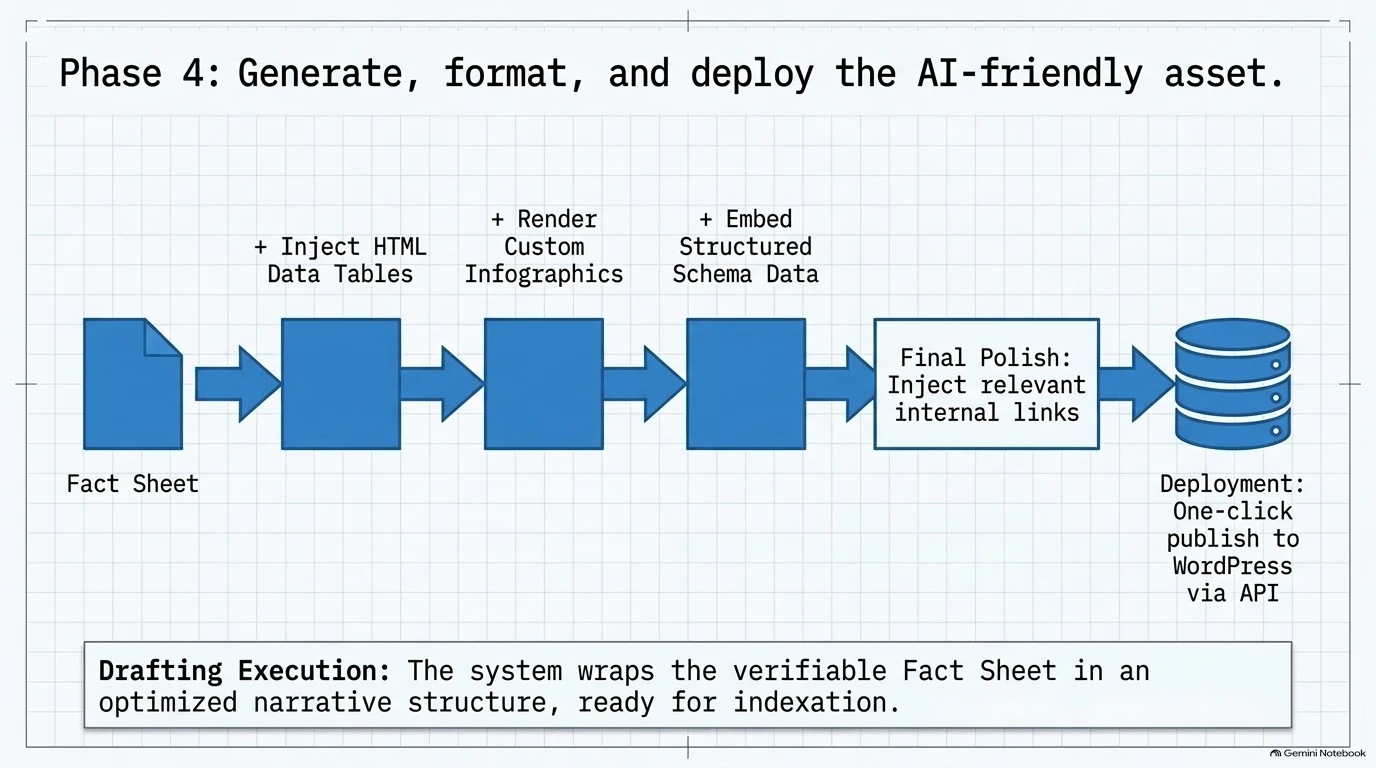
- Generate Linkable Assets: Write the article in a data-first format: clean tables, bolded metrics, clear citations. That's what crawlers parse — and what a researcher skims when they need one quick fact.
Automating the System with Claude
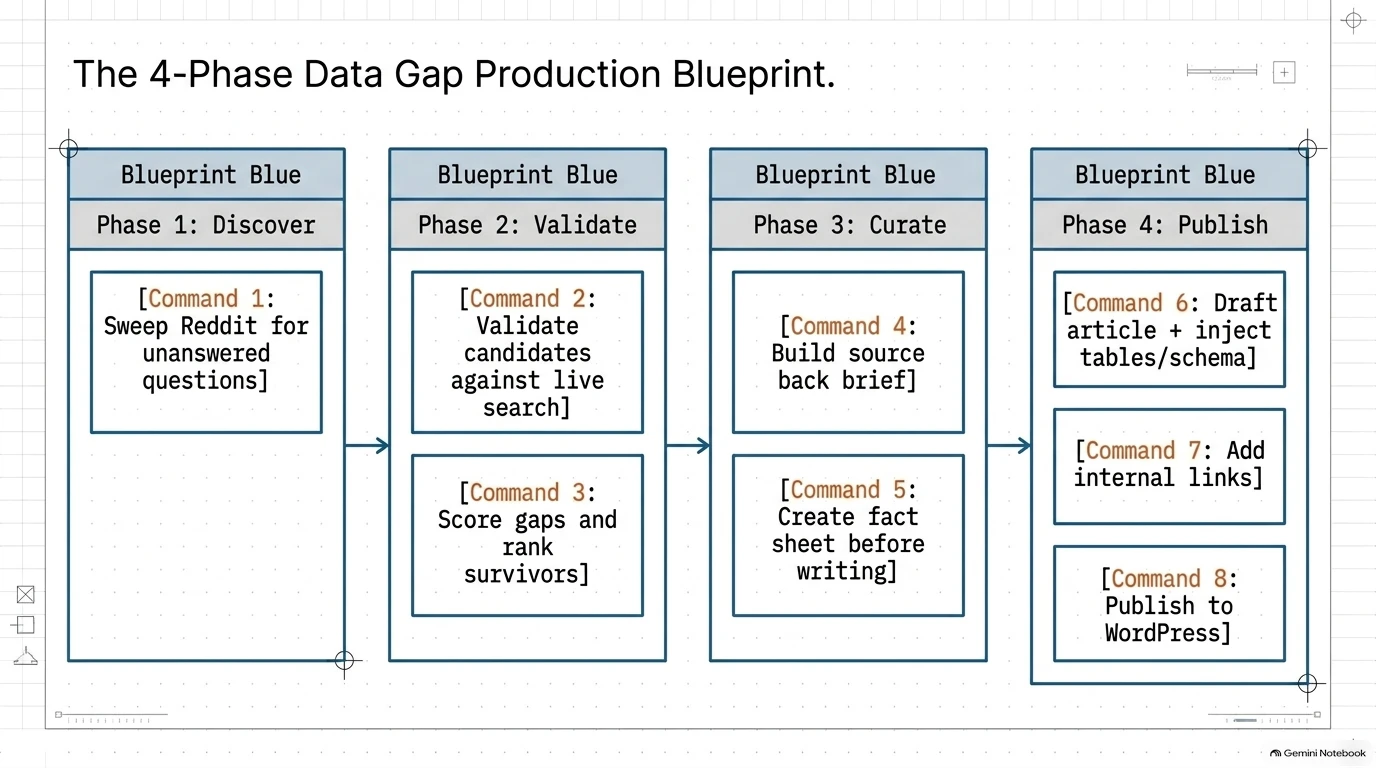
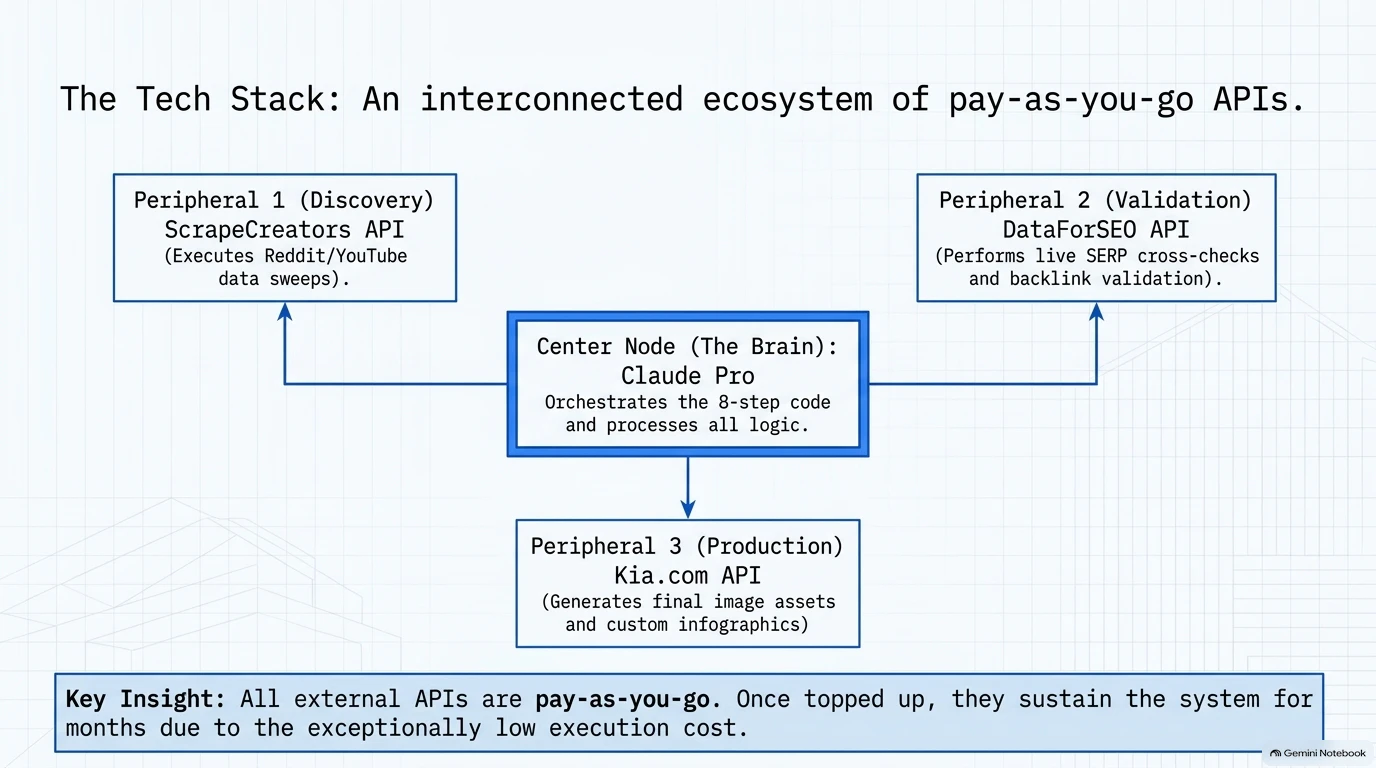
You can run this process by hand. But it pays off when you automate it: with customized AI prompts and APIs inside an LLM like Claude, the workflow turns into an 8-step pipeline.
- Step 1: Sweep Reddit for unanswered data questions.
- Step 2: Validate them against live search results.
- Step 3: Score the gaps and rank the highest-potential topics.
- Step 4: Build a background brief on the sources you'll lean on.
- Step 5: Create a pre-writing fact sheet, accurate down to the last number.
- Step 6: Draft the article, generating structured tables, infographics, and schema.
- Step 7: Add internal links.
- Step 8: Publish straight to your CMS (like WordPress).
To run that pipeline without babysitting it, you need a paid Claude plan (Pro or higher) plus three pay-as-you-go APIs: ScrapeCreators for automated Reddit mining, DataForSEO for checking SERPs and analyzing backlinks (the minimum top-up is $50), and Kie.ai for auto-generating professional infographic images.
Summary
Key Takeaways
- High Authority, Low Cost: You don't need a big budget to win premium links. Fill a "data gap" and you can earn links from sites up to DR 85 — and from Medium at DR 94 — for a few cents in API costs per article.
- Verification is Key: A linkable asset lives or dies on trust, so every number in your article must be verifiable and mapped directly to a trusted primary source.
- Structure Attracts Links: Authors and journalists cite the sources that make their lives easy. Clean tables, structured data, and infographics make your content highly shareable and search-friendly.
- Automation Speeds Up the Process: Claude combined with specialized APIs (Reddit scraping, SERP checking, automated image creation) lets you scale this framework across any niche.
So pick one question nobody has answered with numbers yet, and build the fact sheet before you write a single line of the article.
Check yourself
1. What is the primary objective of the 'Data Gap' method described in the process?
- A. To automate the creation of viral social media posts that redirect traffic to an existing domain.
- B. To improve keyword density for highly competitive search terms by scraping competitor articles.
- C. To identify and fulfill specific informational demands that have not been met by current search engine results.
- D. To use high-budget advertising to acquire backlinks from authoritative news organizations.
Show answer
Answer: C. The method centers on finding 'datadriven questions' on social platforms and verifying that the current search results (SERPs) have not yet provided the required data.
2. According to the Data Gap workflow, which of the following question formats should be targeted during the initial research phase on Reddit or YouTube? (Select all that apply.)
- A. Is there data on...?
- B. What about statistics in...?
- C. Are there any case studies on...?
- D. How do I start a blog about...?
Show answer
Answer: A, B, C. This format directly indicates a user's search for empirical evidence or statistics that may be missing from current web content. The mention of statistics identifies a specific informational gap where numerical data can be curated to create a linkable asset. Requesting case studies signifies a need for specific, structured examples and data that go beyond general advice.
3. During the 'Validation' step of the process, what is the specific purpose of cross-checking a candidate question against live search results?
- A. To determine if the keyword has a difficulty score of 100 on common SEO tools.
- B. To ensure that the specific informational demand has not already been adequately met by other websites.
- C. To calculate the potential cost of running a Google Ads campaign for that specific keyword.
- D. To find the highest-ranking competitors and copy their article structure exactly.
Show answer
Answer: B. Validation is necessary to confirm that a 'gap' actually exists; if the information is already well-covered, it is not a true data gap.
4. Which of the following external APIs are required for the automated Data Gap plugin to function as described? (Select all that apply.)
- A. Semrush for monthly traffic projections.
- B. DataForSEO for SERP and backlink checks.
- C. Kie.ai for infographic image generation.
- D. ScrapeCreators for Reddit scraping.
Show answer
Answer: B, C, D. This API provides the necessary data to validate gaps and score potential topics based on live search results. Visual assets are a key part of the 'linkable asset' strategy, and this specific tool handles the image generation. This tool is used in the first step of the eight-step process to sweep platforms for unanswered questions.
5. What is the recommended timeframe for data collection when building the fact sheet for a new article?
- A. Only information published within the current calendar year.
- B. Every piece of information produced in the past 30 days.
- C. Data from the last 24 hours to ensure the article is trending.
- D. Historical data spanning the last 10 years to show long-term trends.
Show answer
Answer: B. The strategy emphasizes freshness and curation of the most recent data to provide value that older articles might lack.
6. In the context of this strategy, why is the article structure described as 'intentionally' looking the same across different topics?
- A. Because the Claude AI model is incapable of generating diverse layout formats.
- B. To maintain a format that is specifically optimized for attracting backlinks and AI-generated citations.
- C. To reduce the amount of Claude API tokens used during the generation process.
- D. To bypass plagiarism filters by using a standardized template.
Show answer
Answer: B. Uniformity in these 'linkable assets' ensures they consistently provide the structured data that both humans and AI models look for when citing sources.
7. Which of the following are components of the eight-step 'Claude code' process for generating these articles? (Select all that apply.)
- A. Create a fact sheet where every number is verifiable down to the source.
- B. Manually call university professors to verify case study outcomes.
- C. Score the gaps and rank the survivors based on candidate validation.
- D. Generate tables, infographics, and structured data.
Show answer
Answer: A, C, D. Verification is crucial for the 'datadriven' aspect of the method, ensuring the content is high-quality and referenceable. This step ensures that resources are only spent on the topics with the highest potential for impact. These elements transform a standard article into a 'linkable asset' that other sites want to reference.
8. Based on the results presented, what is the estimated cost of API usage for a single published article using this method?
- A. 50.00 per article.
- B. 13.00 per backlink generated.
- C. The cost of a monthly Claude Pro subscription only.
- D. 0.50 in API costs.
Show answer
Answer: D. The author repeatedly highlights the efficiency of the method, stating that 50 cents is the average cost per run for a published article.
9. How does the author characterize the niches where this Data Gap method is applicable?
- A. Specifically for AI-related software and technology niches only.
- B. Only niches with a Keyword Difficulty (KD) lower than 20.
- C. Virtually any niche that has data, from informational sites to home services.
- D. Only highly academic niches like university research and law.
Show answer
Answer: C. The author explicitly states that the skill applies widely as long as there is data that can be curated.
10. Which of the following high-authority (DR) domains were cited as actual backlink sources obtained using this method? (Select all that apply.)
- A. The New York Times (DR 98)
- B. Times Higher Education (DR 85)
- C. Medium (DR 94)
- D. Undetectable.ai (DR 79)
Show answer
Answer: B, C, D. This academic-focused site is cited as one of the successful backlinks generated by the university AI detector article. Medium is specifically listed as a high-authority source providing a DR 94 link. This link is mentioned in the list of high-DR sites that linked to the generated data gap articles.