 SkillBamboo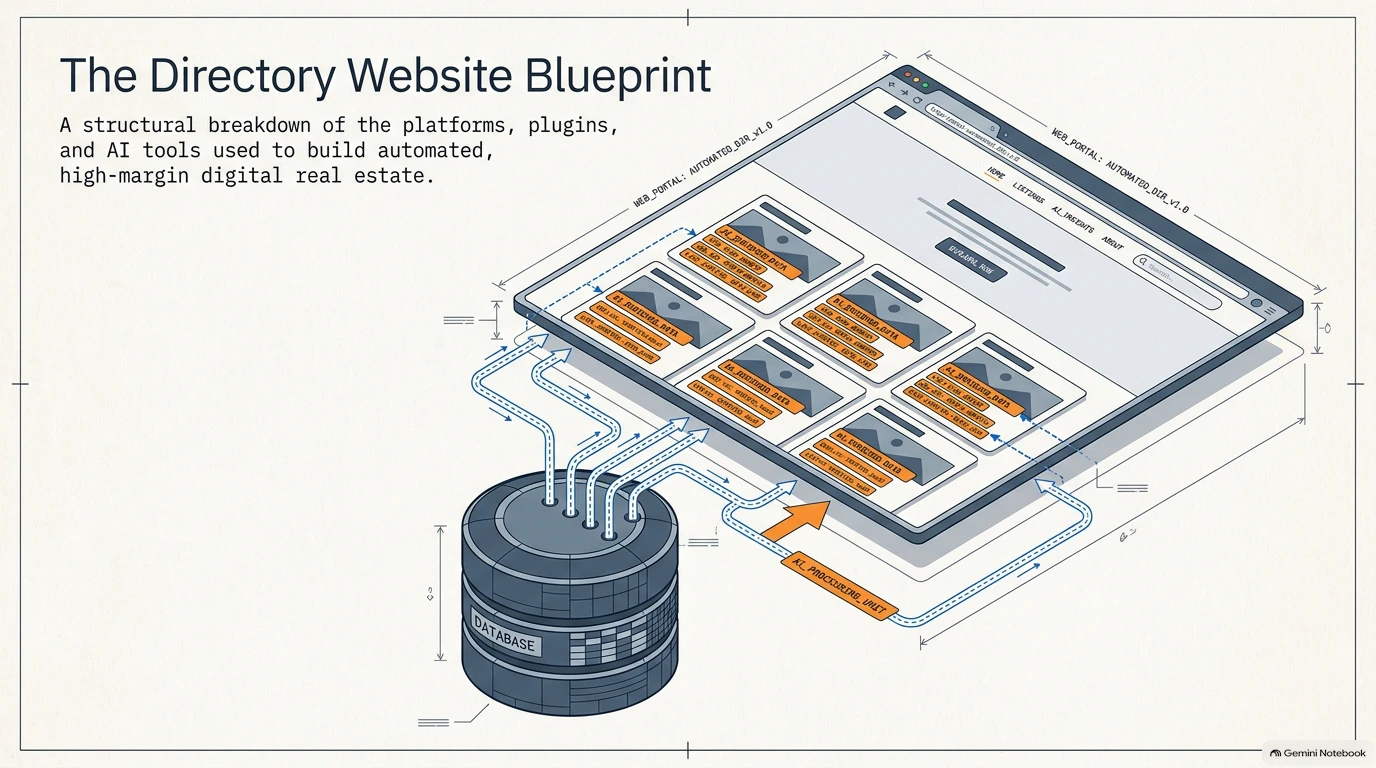

Why Directory Websites Still Work
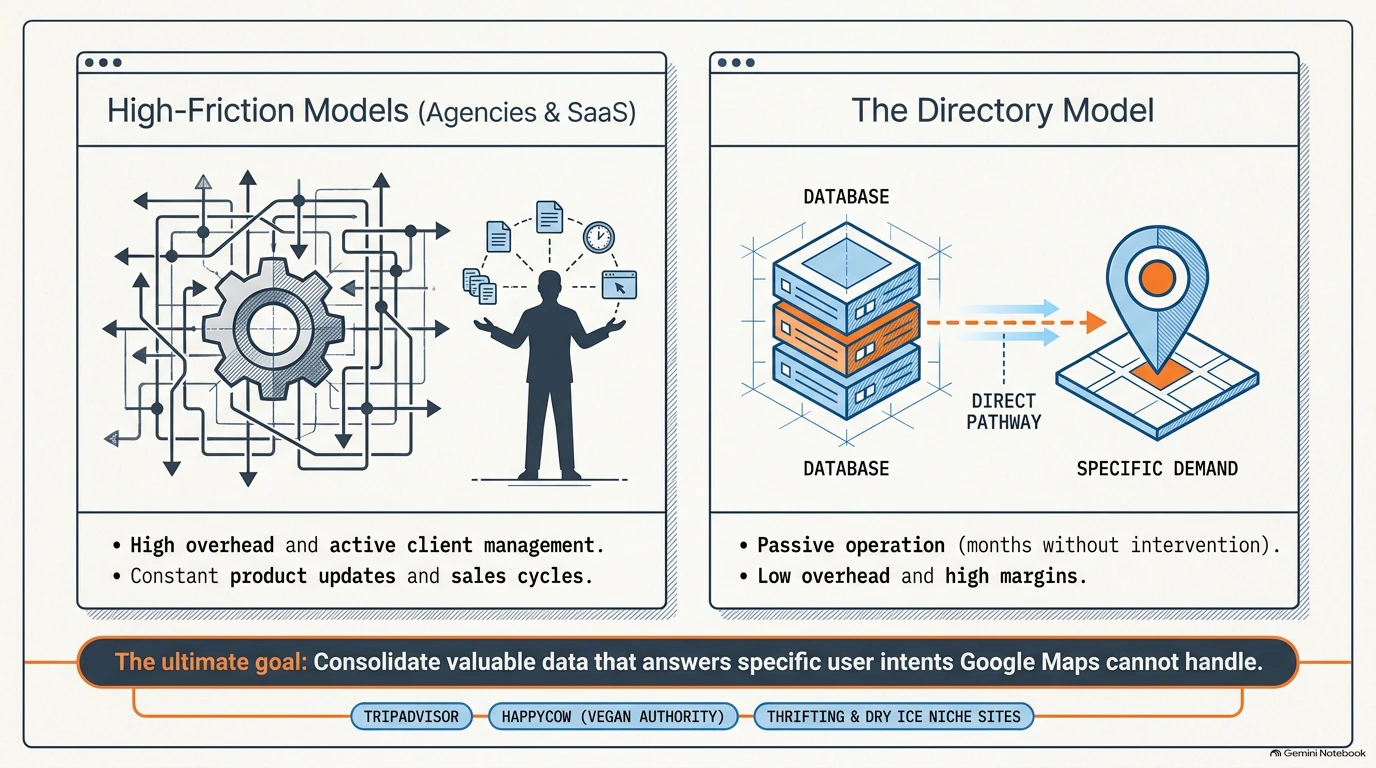
An ugly, single-page website that lists where to buy dry ice can pull in thousands of passive visitors every single month. Nobody updates it daily, and nobody has to sell anything to get that traffic.
Most people who want an online business go after complex software-as-a-service (SaaS) platforms or crowded e-commerce stores, while some directory builders report earning $2,500 or more a month from simple online directories. This guide breaks down how they spot high-demand niches, build lightweight directories with minimal tools, and win the top spots in Google search results.
Here's what it covers:
- What a directory website is, and what makes one profitable.
- How to spot untapped, high-demand niches with keyword research tools and social listening on TikTok and Reddit.
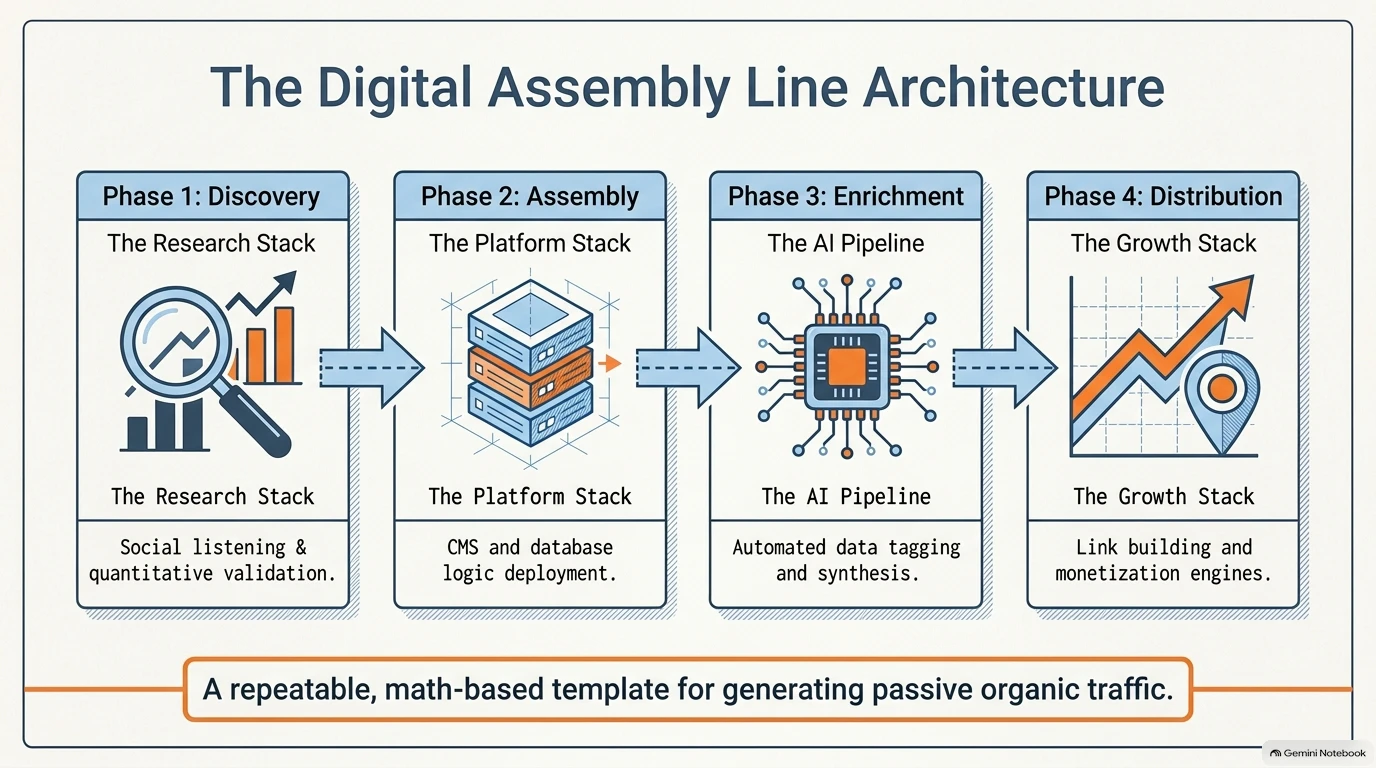
- A budget-friendly "tech stack" to build, automate, and filter directory listings.
- A low-cost link-building tactic that helps you outrank competitors.
- How to monetize a directory through display ads, digital products, and sponsors.
What is a Directory and Why You Should Care
A directory website is a curated, searchable collection of businesses, locations, or resources. Think of TripAdvisor for travel, Care.com for caregiving, or Yelp for local businesses.
But you don't need to build a billion-dollar platform to make this model work. Hyper-niche directories like HappyCow (a directory of vegan restaurants) or a local dog park locator can bring in substantial monthly passive income.
The Core Value Proposition
Directories work because Google Maps and general search engines often struggle with highly specific, location-based queries.
Search Google Maps for a very niche term, and you'll often get a list of irrelevant local businesses instead of what you were looking for. A directory solves that bottleneck by putting accurate data in one convenient place that's easy to filter.
Why it's a great beginner business:
- Low Overhead: You can get a first version live for around $100 if you stick to free plugins. A paid stack costs more, as the fact-check below shows.
- Simple Math: Find a topic where search demand is bigger than search supply, build the directory, and wait for Google to rank it.
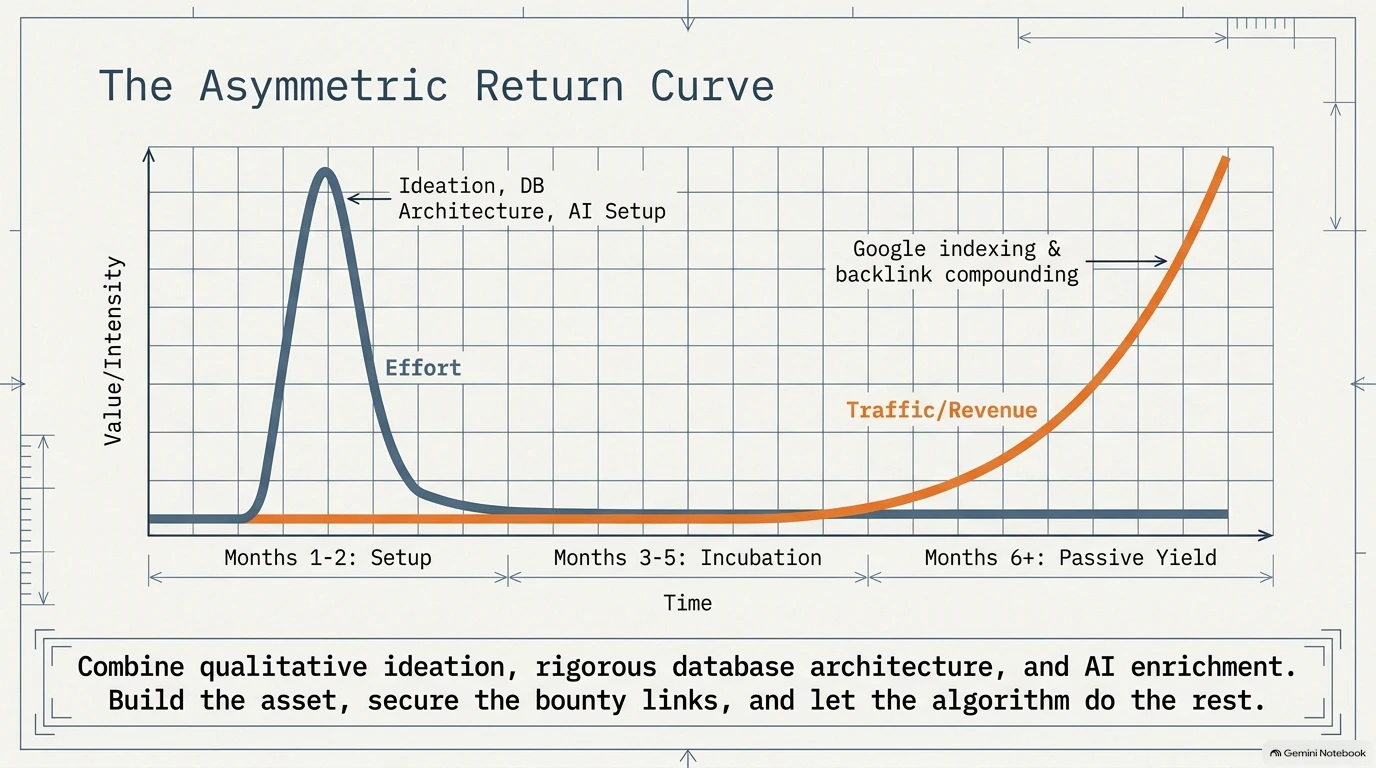
- Passive Income: Once a directory ranks on page one, it needs very little maintenance. It can keep generating traffic and revenue for months with little work. You'll still want to check that the listings are current, though, because a directory is only as useful as its data.
How to Find Untapped Asymmetric Niches
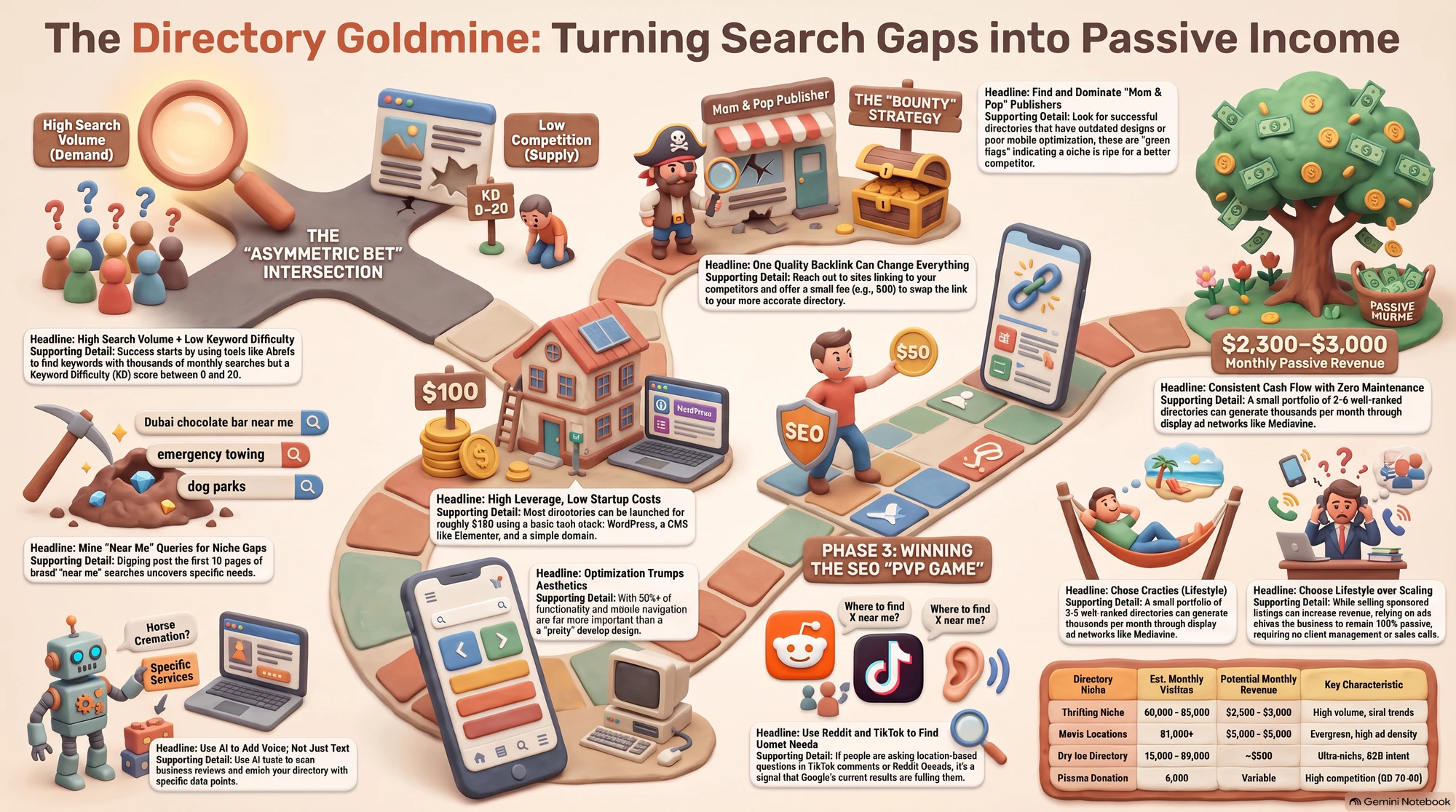
Finding the right niche comes down to "asymmetric bets": opportunities with low competition (low downside) but high search volume (high upside).
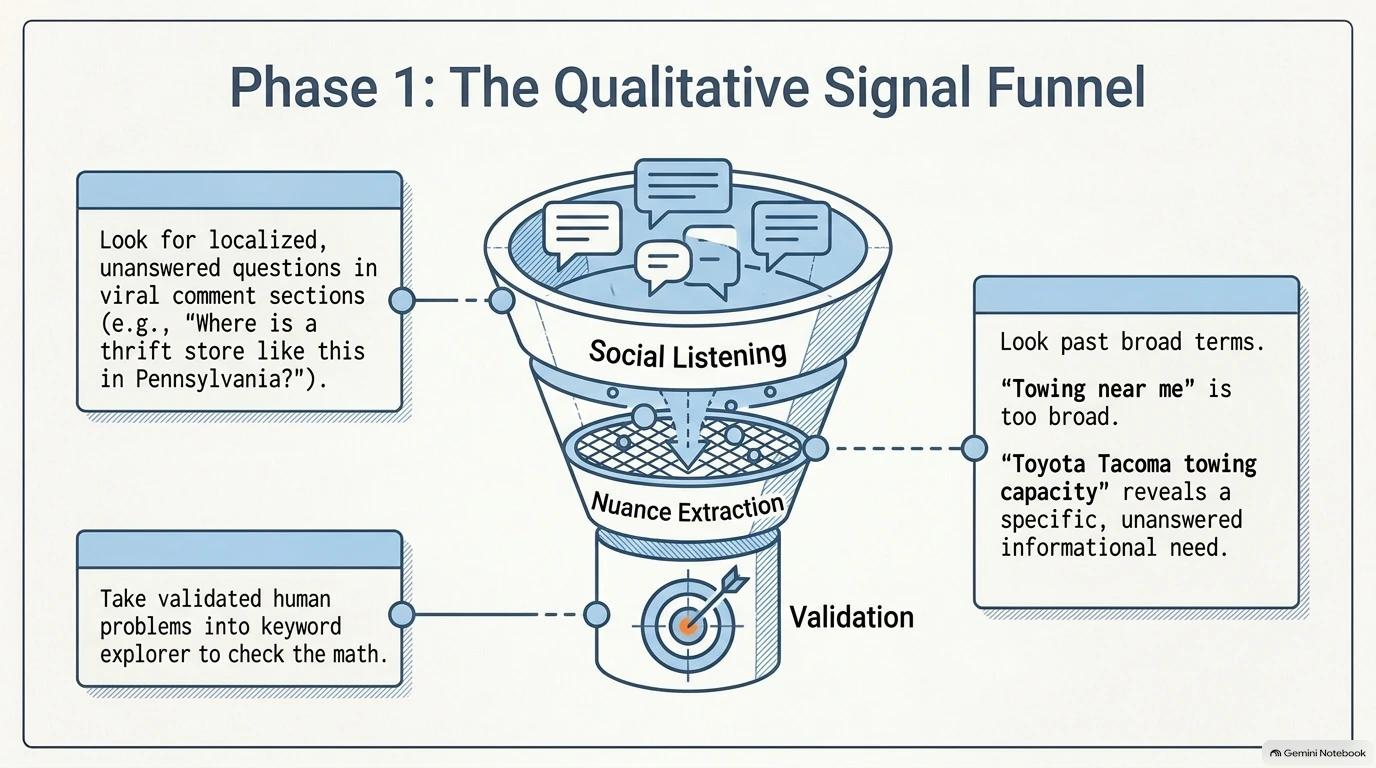
Method 1: Social Listening on TikTok and Reddit
Pay attention to viral trends and to what frustrates people. One thrifting directory, for example, was born after its creator noticed viral Gen Z thrifting hauls on TikTok and read what people were asking under them.
The comments were full of location questions like "Where is this?" and "Is there one in Pennsylvania?" That was a clear bottleneck. People wanted to find these stores, but Google Maps wasn't showing them.
Method 2: The Ahrefs "Near Me" Strategy
A keyword research tool like Ahrefs lets you hunt for these opportunities in bulk. Here's how:
- Search for the broad phrase "near me" in a keyword explorer tool.
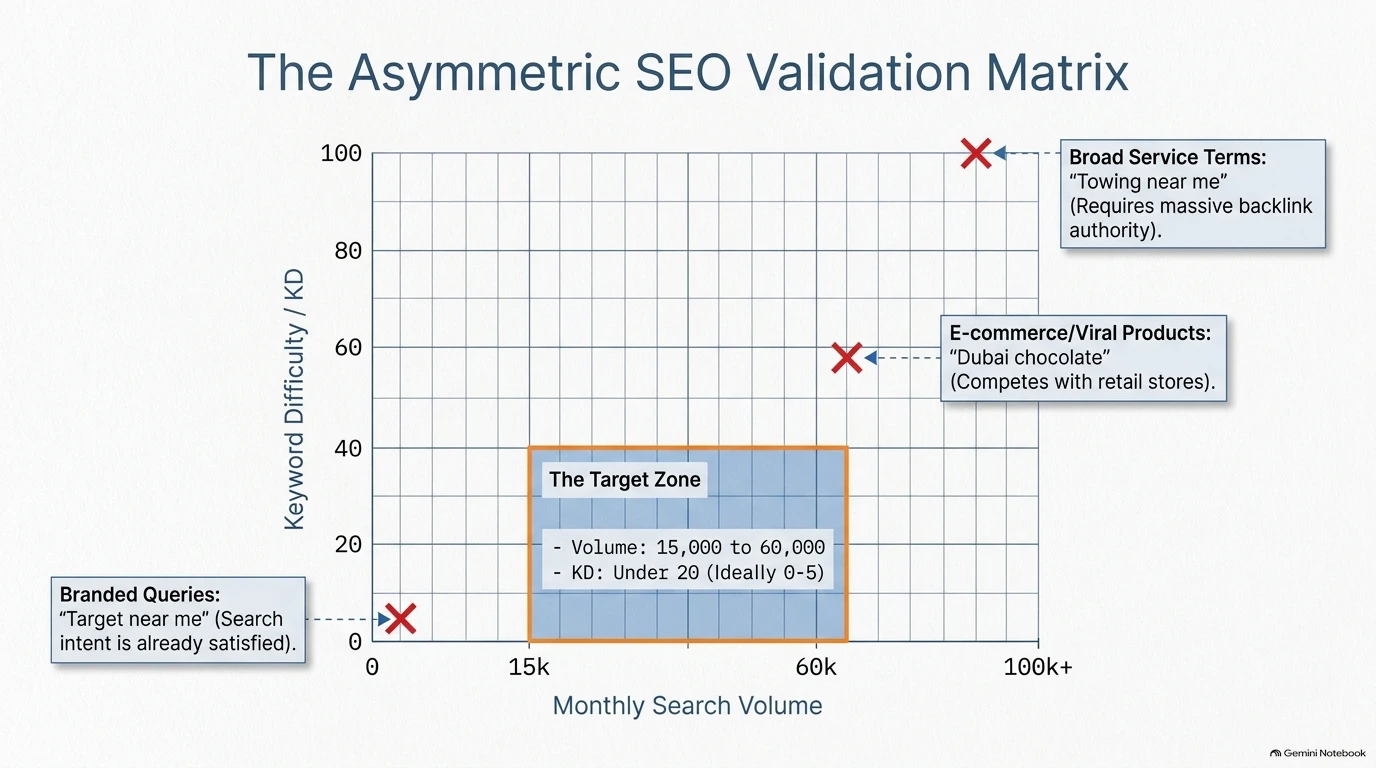
- Filter the results to a maximum Keyword Difficulty (KD) of 5 to 20. KD runs from 0 (easiest to rank) to 100 (hardest).
- Sort by search volume and look for non-branded keywords. Skip terms like "Target near me," because a brand already owns that search.
- Investigate anything unusual. If you see high search volume for a specific towing capacity or an emergency service, you may have found a viable directory idea.
Finding a "Bounty"
Look for a competitor who has already succeeded but looks like a basic "mom-and-pop" publisher. That's a green flag.
If an outdated, poorly designed site can rank on page one and pull in 100,000 visitors, the niche is proven and ripe for you to step in and do it better.
The Directory Builder's Tech Stack
You don't need to be a software engineer to build a working directory. An MVP (minimum viable product, the simplest version that does the job) is well within reach with user-friendly website builders and plugins.
The Content Management System (CMS)
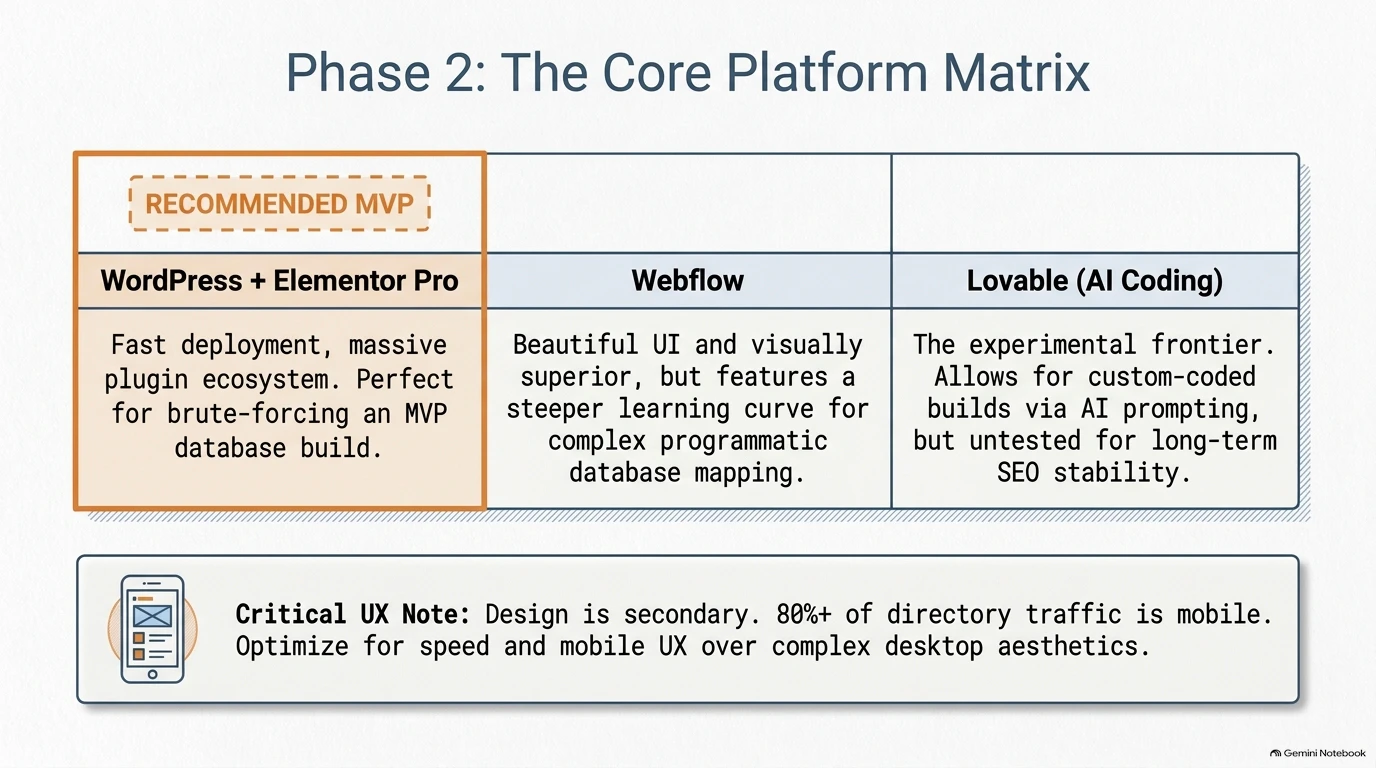
- WordPress: The industry standard for directories, thanks to its solid database features and plugin ecosystem.
- Webflow: A good alternative if you prefer modern, visual design tools.
Essential Tools and Plugins
- Elementor Pro: A drag-and-drop page builder that lets you design your site quickly without touching code.
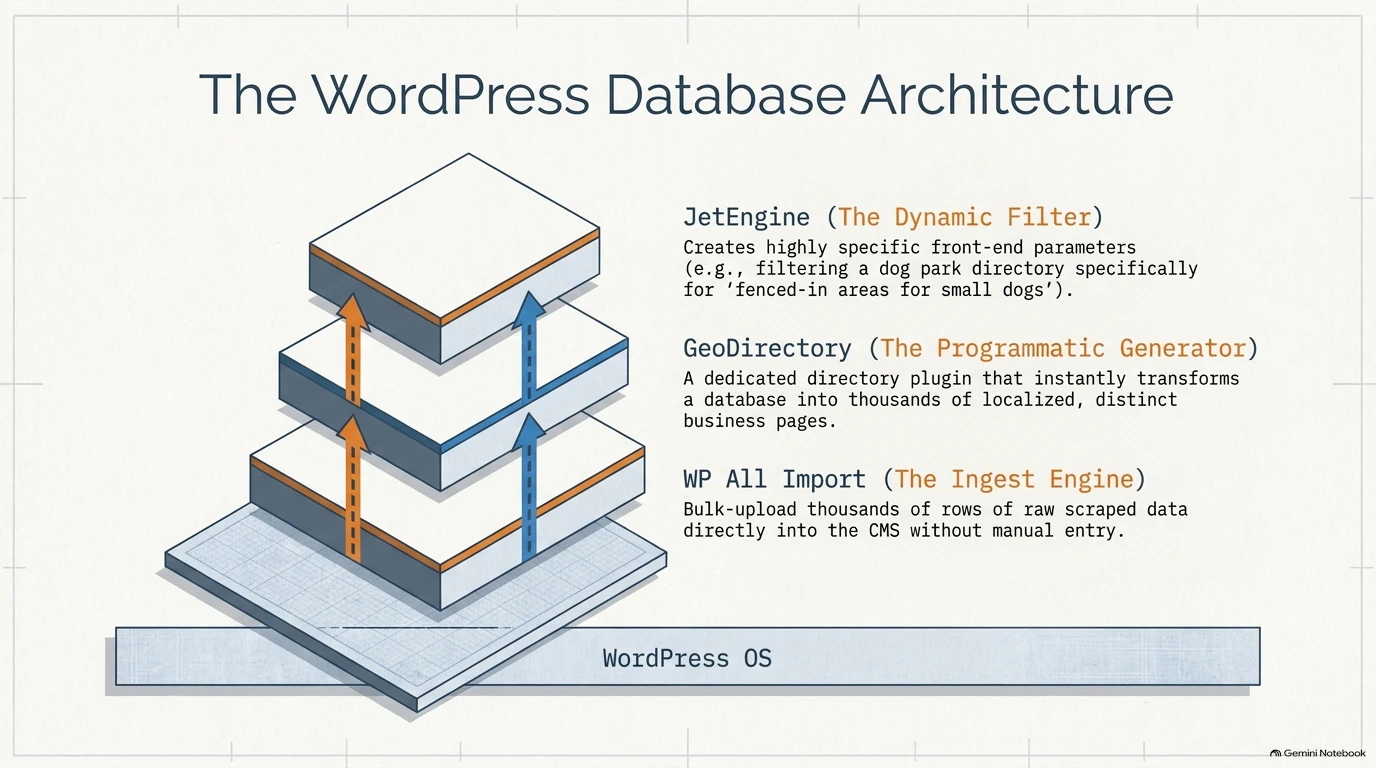
- GeoDirectory: A WordPress plugin built specifically to handle location-based directory listings programmatically, generating pages from your data instead of by hand.
- WP All Import: Bulk-uploads thousands of business listings from a CSV file straight into your site's database. It's what saves you from adding listings by hand.
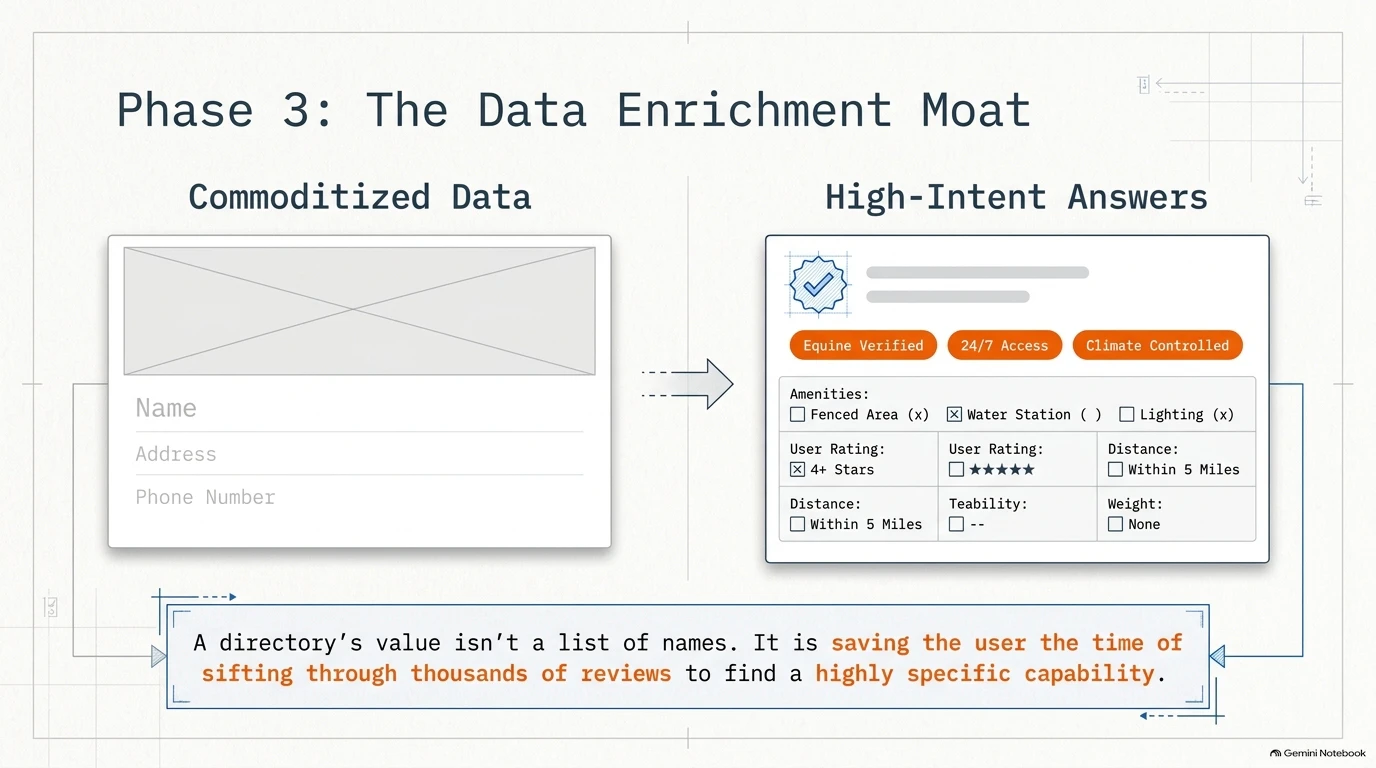
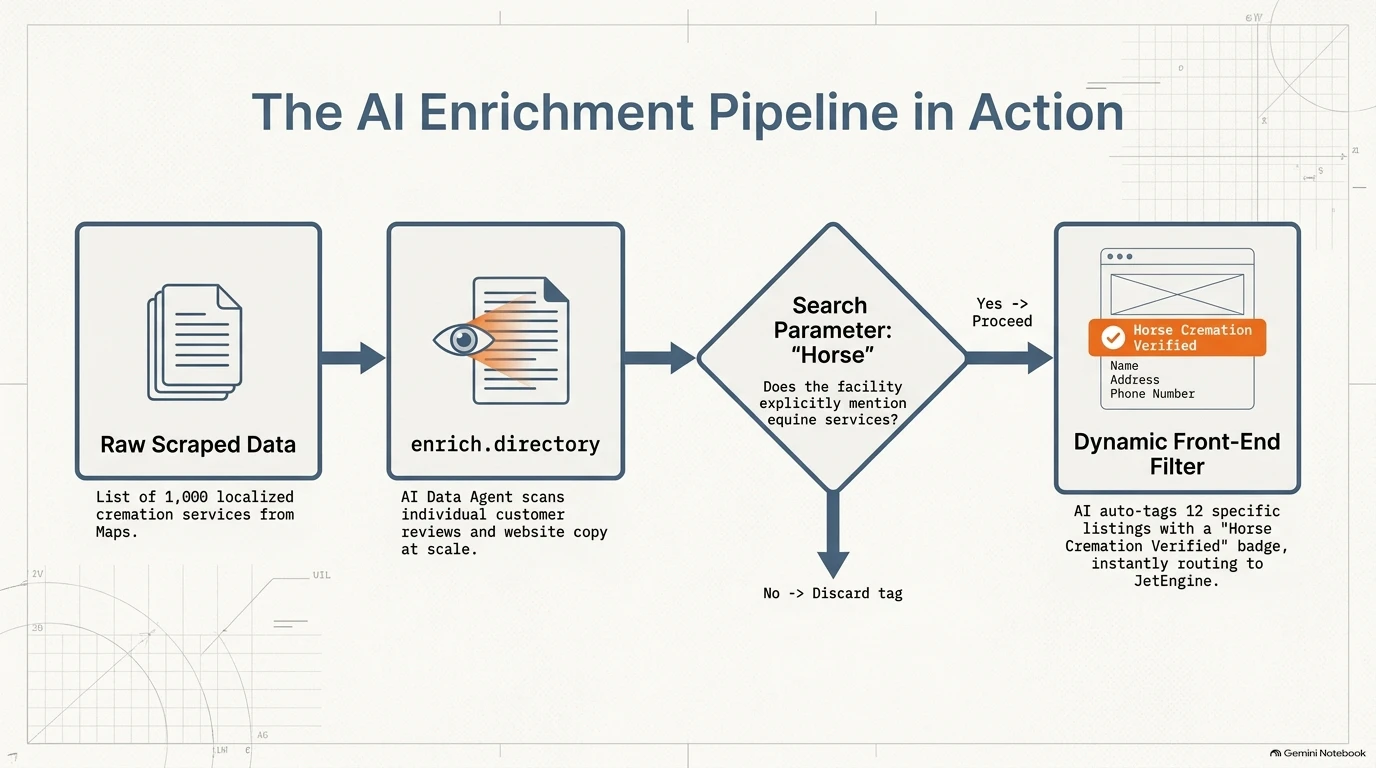
- JetEngine: Lets you build custom filters, such as "dog parks with small dog areas" or "thrift stores with flea markets."
The Role of AI in Data Enrichment
A directory is only as valuable as its data. So you'll want to enrich it, and AI can speed that up.
Say you're building a specialty pet services directory: AI tools can scan business reviews across the web and flag which businesses offer niche services, like horse cremation. That can save you hundreds of hours of manual research.
The Art of the Backlink: The 80/20 Strategy
Search engine optimization (SEO) is a player-versus-player (PVP) game, and because only a handful of organic results fit on the first page of Google, you have to be comfortable outmaneuvering your competitors.
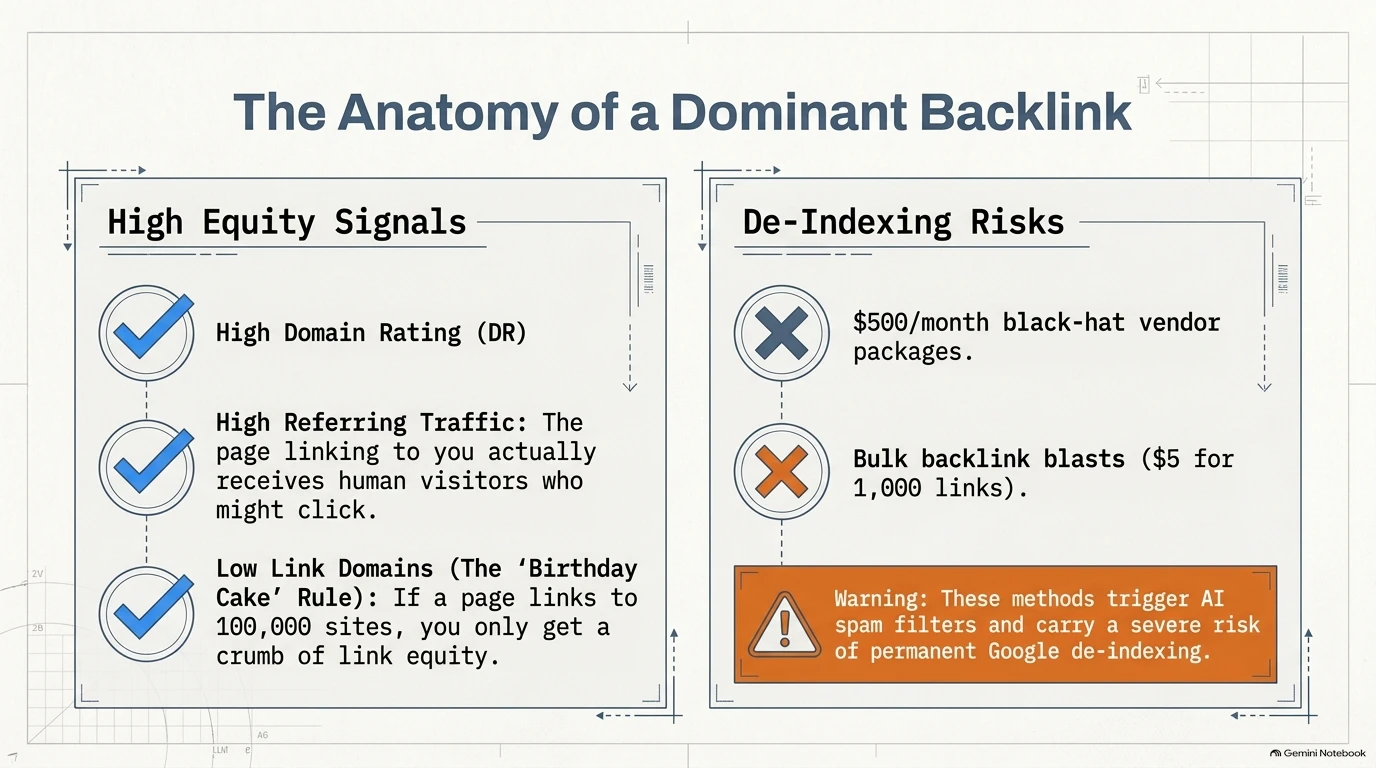
The main weapon in this game is the backlink: a link from another website to yours. Think of it as a vote of confidence in Google's eyes.
The "Link-Swapping" Growth Hack
You don't have to pay thousands of dollars to sketchy link-building agencies to get backlinks like that. Try this aggressive, highly targeted outreach method instead:
- Use a tool like Ahrefs to analyze your closest competitor's backlink profile.
- Find the websites that currently link to that competitor.
- Reach out to those site owners directly with a pitch that offers them something of value.
- The Swap Pitch: Say, "Hey, I noticed you link to [Competitor] in your article. We've built a far more accurate, updated directory for this niche. Would you be open to swapping their link out for ours? I'd be happy to pay you $50 for the swap."
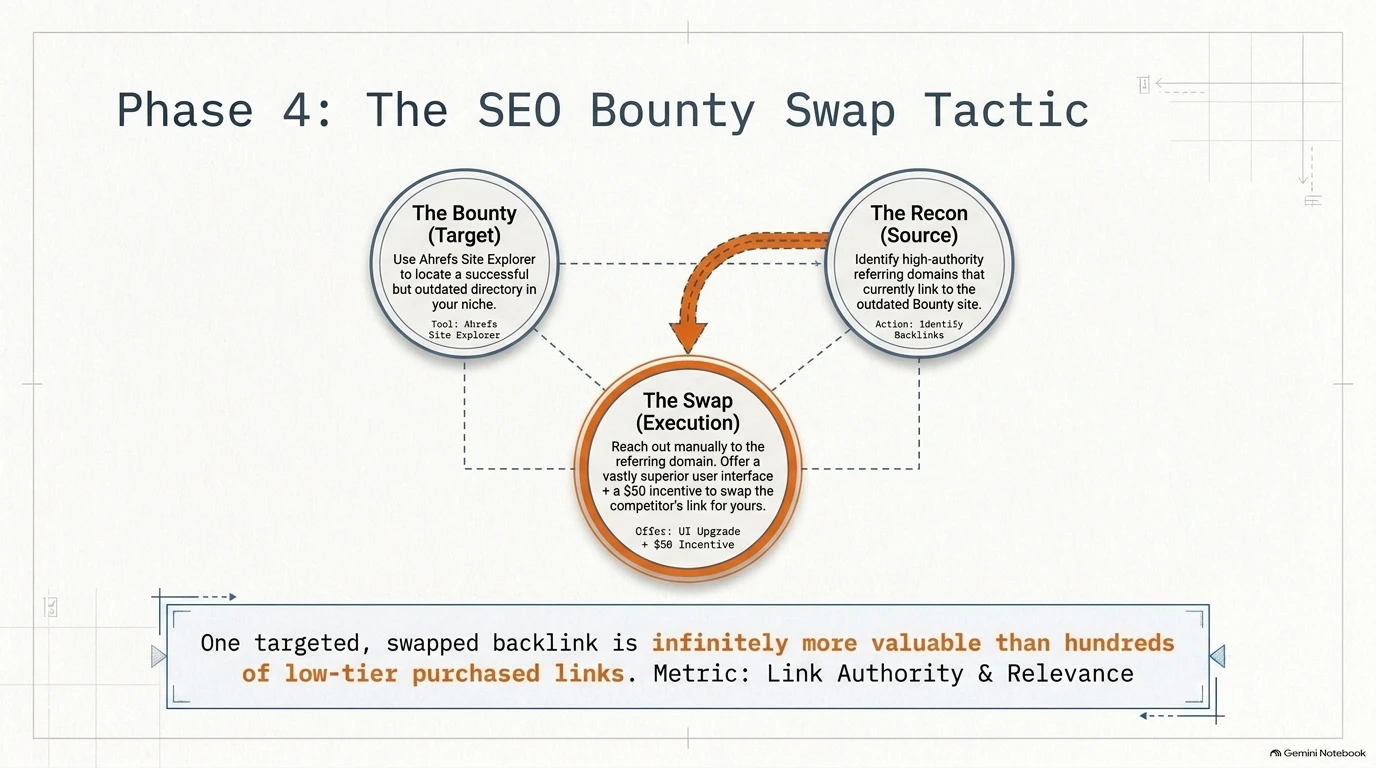
Why this works so well: When a site owner swaps the link, you gain a high-quality backlink and your competitor actually loses one.
That double effect can push your directory to the number one spot on Google. Directory builder Frey Chu says a single backlink like this was enough to push one of his directories onto page one.
Monetization and the Reality of SEO
Once your directory starts getting organic traffic, there are several ways to turn those visitors into income.
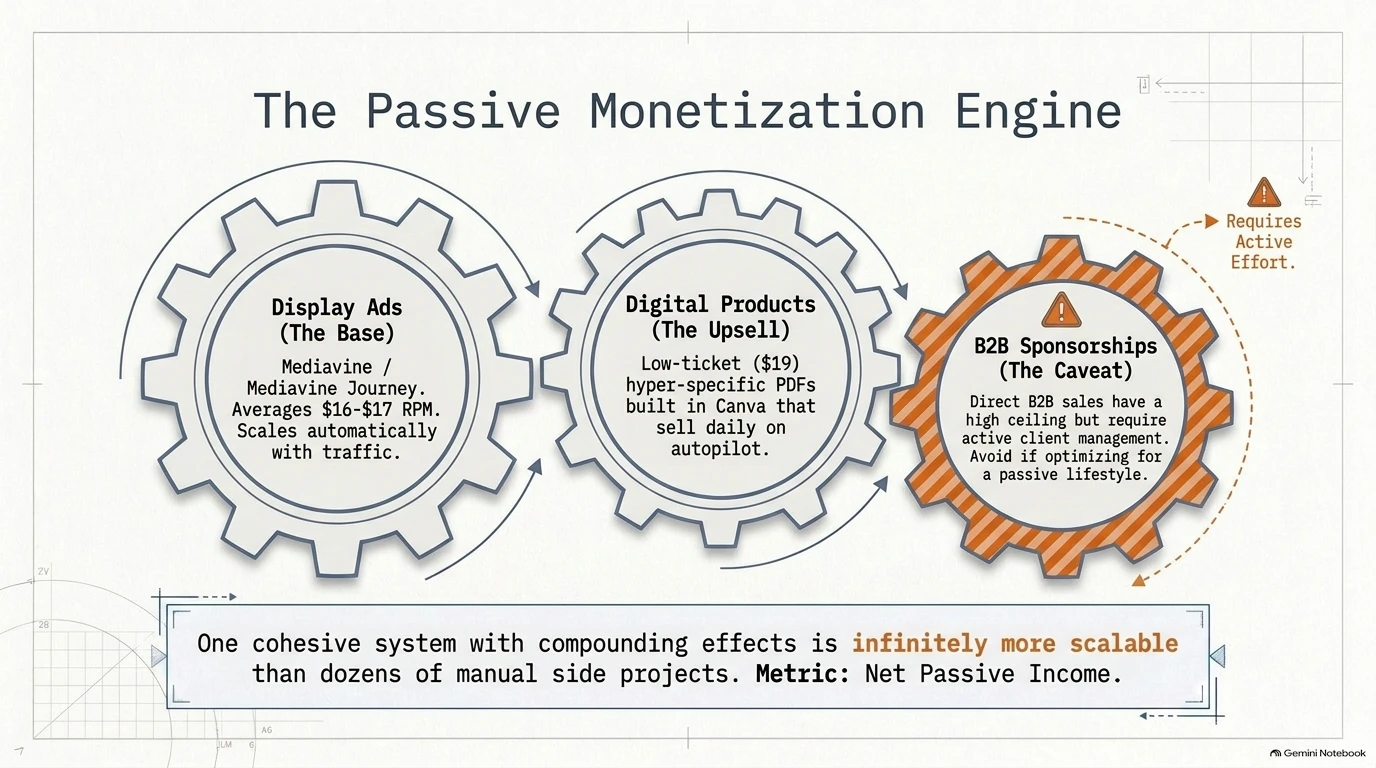
Three Main Monetization Streams:
- Display Ads: Networks like Mediavine or Mediavine Journey pay you simply for the traffic your site gets. This is the most passive route.
- Digital Products: Create a simple, helpful resource for your niche (e.g., a $19 PDF guide designed in Canva) and sell it on your site. That can turn traffic into daily sales.
- Sponsored Listings (B2B): Charge businesses a fee to appear at the top of your directory. It pays well, but it takes active sales outreach and customer management, and at that point your passive site starts to look more like an active marketing agency.
A Reality Check for Beginners
SEO is a slow game. You won't see massive traffic two weeks after launch, because it takes months for Google to index a new site, trust it, and rank it. That's OK.
Treat your first directory as a place to learn skills, not a get-rich-quick scheme. Start with a low-competition niche (KD of 0 to 5), because it lets you prove the concept to yourself before you invest more. Once you see the formula work, you can scale by building a portfolio of directories across multiple niches.
Fact-Checking the Directory Playbook
The directory model holds up. Some of the numbers that travel with it don't. Here's what the method looks like when you check it against public sources, as of September 2026.
Where the Method Comes From
This playbook closely follows the one directory builder Frey Chu shares publicly. His first directory was a thrifting guide, and he now reports a portfolio of directory sites earning $2,500 or more a month (Niche Pursuits).
The link-swap tactic is his too. He finds the sites that link to a competitor and asks them to swap in his link instead.
What the Stack Really Costs
"Around $100" works only on free tools: WordPress, the free core of GeoDirectory, and the free edition of WP All Import, which covers basic imports. The paid plugins from the tech stack above add up fast (prices at the time of writing):
- Elementor Pro: from $60 a year for one site (pricing breakdown).
- JetEngine: $43 a year for one site (Crocoblock).
- WP All Import Pro: from $149 a year (WP All Import).
That's about $250 a year before you pay for a domain and hosting. The good news is that you don't need any of it on day one. Launch on the free versions, prove the niche gets traffic, and only then pay for the tools that save you time.
How Long Imports Take
WP All Import can load thousands of listings, but not in seconds. Speed depends on your hosting and on whether each listing pulls in images.
In one documented test, an import handled about 1,100 records in 20 minutes before tuning and about 10,900 in the same 20 minutes after it (Super Speedy Plugins). So plan for minutes or hours, and if an import crawls, start with the fixes in the WP All Import docs.
Mobile Comes First
For local searches, the mobile share is even higher than you might guess. Local SEO roundups put it at about 88% of "near me" searches (Synup), while across all searches mobile is closer to 64% (Stacc).
In other words, most people will meet your directory on a phone. Test every listing page there first.
Page One Is Smaller Than It Used to Be
The classic "ten blue links" is gone on many searches. AI answers, maps, and other search features push organic results down, and some first pages now show only six to eight of them (Protofuse).
That makes the asymmetric-bet approach more useful, not less. In a low-competition niche, a handful of open spots is all you need.
Key terms
- Keyword Difficulty (KD) — A metric ranging from 0 to 100 that estimates how hard it is to rank on the first page of Google for a specific search term.
- Search Volume (SV) — The estimated number of times a specific keyword is queried in a search engine within a single month.
- Revenue Per Mille (RPM) — The estimated earnings an ad publisher receives for every 1,000 impressions or sessions generated on a website.
- Programmatic Directory Build — An automated SEO strategy where a database is used to generate and publish hundreds or thousands of location-specific pages simultaneously.
- Link Juice — A slang SEO term for the ranking value or authority passed from one page to another through hyperlinks.
Summary
Building directory websites is one of the more reliable and overlooked ways to generate passive income online. Focus on niches where Google Maps fails to deliver specific results, and you can capture highly targeted, organic traffic.
Keep your site simple. Prioritize mobile optimization, since most local searches happen on phones. Use targeted link swaps to climb the rankings, then be patient, let the SEO compound, and build out a portfolio of directories over time.
Key Takeaways:
- Solve Specific Bottlenecks: Build directories around highly specific, location-based searches that general maps and search engines don't answer well.
- Start with Low Competition: For your first site, target keywords with a Keyword Difficulty (KD) between 0 and 5, because that's the easiest way to build confidence and learn the mechanics of SEO.
- Keep Design Functional: You don't need a fancy website to rank well. Prioritize mobile layout, easy navigation, and clean data over complex aesthetics.
- Use Link Swaps: Reach out to the sites that link to your competitors and buy link swaps, which boosts your authority and weakens theirs at the same time.
Check yourself
1. When scouting for a new directory niche using SEO tools, which combination of metrics represents an 'asymmetric bet' that is ideal for a beginner?
- A. Zero keyword difficulty paired with low search volume.
- B. Moderate keyword difficulty paired with high cost-per-click (CPC).
- C. High keyword difficulty paired with high search volume.
- D. Low keyword difficulty paired with high search volume.
Show answer
Answer: D. This combination indicates a gap where there is significant demand but relatively low competition, making it easier to rank and profit quickly.
2. Which of the following are effective methods for identifying untapped directory opportunities based on real-world user frustration? (Select all that apply.)
- A. Analyzing branded keywords for major corporations like McDonald's or Target.
- B. Searching Reddit threads to see if people are dissatisfied with current search results.
- C. Monitoring viral TikTok comments for location-based queries.
- D. Filtering Google Maps for businesses with a high volume of negative reviews.
Show answer
Answer: B, C. High engagement on Reddit regarding a specific query often suggests that existing search engine overviews or results are not meeting user needs. Viral videos often spark niche interests, and comments like 'where is this?' indicate a bottleneck where information is not easily accessible via standard maps.
3. In the context of link building, what is the primary advantage of the 'link swap' strategy involving a competitor's backlink?
- A. It guarantees that your site will rank in the first position within 24 hours.
- B. It bypasses the need for the referring site to have a high domain authority.
- C. It simultaneously strengthens your domain while weakening a direct competitor.
- D. It is the only way to avoid being penalized by search engines for paid links.
Show answer
Answer: C. By convincing a site to replace a competitor's link with your own, you gain authority while removing a key ranking signal from your rival.
4. For a directory owner looking to scale to thousands of listings, which tools are most useful for managing large datasets and filtering content? (Select all that apply.)
- A. Canva for designing high-fidelity site mockups.
- B. Elementor Pro for building the visual layout quickly.
- C. Jet Engine for creating custom data filters.
- D. WP All Import for bulk data uploads.
Show answer
Answer: B, C, D. Drag-and-drop builders allow for rapid development of a Minimum Viable Product (MVP) without needing to code from scratch. Filters allow users to navigate complex data by specific attributes, such as finding dog parks that are specifically 'fenced-in'. Bulk importing is essential for programmatic builds where manual entry of thousands of locations is not feasible.
5. Why might a niche like 'towing near me' be considered an intermediate or advanced challenge for a new directory builder?
- A. The search intent for 'towing' is too specific to be profitable.
- B. The high monetization potential leads to intense competition from established businesses.
- C. It is impossible to find data on towing companies for the directory.
- D. Towing is a seasonal niche that only receives traffic in the winter.
Show answer
Answer: B. When a niche is highly profitable, competitors invest heavily in SEO and backlinks, making it difficult for a new, low-authority site to rank.
6. What is the primary trade-off when choosing a passive display ad model over a sponsored B2B listing model for monetization?
- A. Lower revenue ceilings in exchange for a significantly more hands-off lifestyle.
- B. Complete immunity to search engine algorithm updates.
- C. Higher revenue ceilings with fewer technical SEO requirements.
- D. Increased traffic volume as a direct result of the ad network's authority.
Show answer
Answer: A. Display ads require no active sales work once set up, whereas managing sponsorships effectively turns the business into a marketing agency.
7. How can AI be most effectively utilized to 'enrich' directory data without manual research for every listing?
- A. By letting AI decide which niche will be most profitable in the next decade.
- B. By using AI to rewrite all content to avoid being indexed by Google.
- C. By using AI to automatically generate backlinks from reputable news sites.
- D. By prompting AI to sift through reviews to find specific service attributes.
Show answer
Answer: D. AI can analyze thousands of user reviews to identify if a business offers a specific service, such as 'horse cremation,' saving hours of manual labor.
8. When assessing the value of a potential backlink, why is the number of 'outbound links' on the referring page important?
- A. It indicates the page is part of a high-authority private blog network (PBN).
- B. Search engines only index pages that have at least 100 outbound links.
- C. The more outbound links a page has, the more likely your site will be found by users.
- D. A page that links to many sites dilutes the amount of 'link equity' passed to yours.
Show answer
Answer: D. Analogous to splitting a cake into many pieces, a backlink is less powerful if the authority of that page is shared among thousands of other sites.
9. What is the primary reason an 'exact match domain' (EMD) is often sought after in the directory business?
- A. It provides a significant, proven advantage in ranking for that specific keyword.
- B. It protects the site from being copied by other 'copycat' directories.
- C. It automatically grants the site a domain rating of at least 50.
- D. It eliminates the need for any high-quality content or data enrichment.
Show answer
Answer: A. While not a magic bullet, having the keyword in the domain name acts as a relevant signal to search engines and users.
10. Which of the following are characteristics of a 'Bounty' site when conducting niche research? (Select all that apply.)
- A. It is a successful site that appears to be a 'mom and pop' publisher.
- B. It is currently ranking in the top search results for a target niche.
- C. It has an extremely polished, high-budget design with complex animations.
- D. It is a government-owned database or a major international directory.
Show answer
Answer: A, B. A site that looks less corporate (non-Forbes level) is a 'green flag' because it suggests a solo builder can realistically compete. The goal of finding a bounty is to see someone who has successfully gone before you, proving the niche is viable.